
Sorry Generator
Active Voice: A Simple Guide for Beginners
Active voice is one of the most important grammar topics in English. If you want your writing and speaking to sound clear, natural, and confident, you must understand active voice.
In this complete guide, you will learn what active voice is, how to use it, when to use it, and how it is different from passive voice. Everything is explained in easy English, with real-life examples, practice sentences, and common mistakes.
This lesson is ideal for:
- Beginners
- ESL / non-native learners
- Students
- Content writers
- Anyone improving English grammar
Let’s start from the basics.
What Is Active Voice?
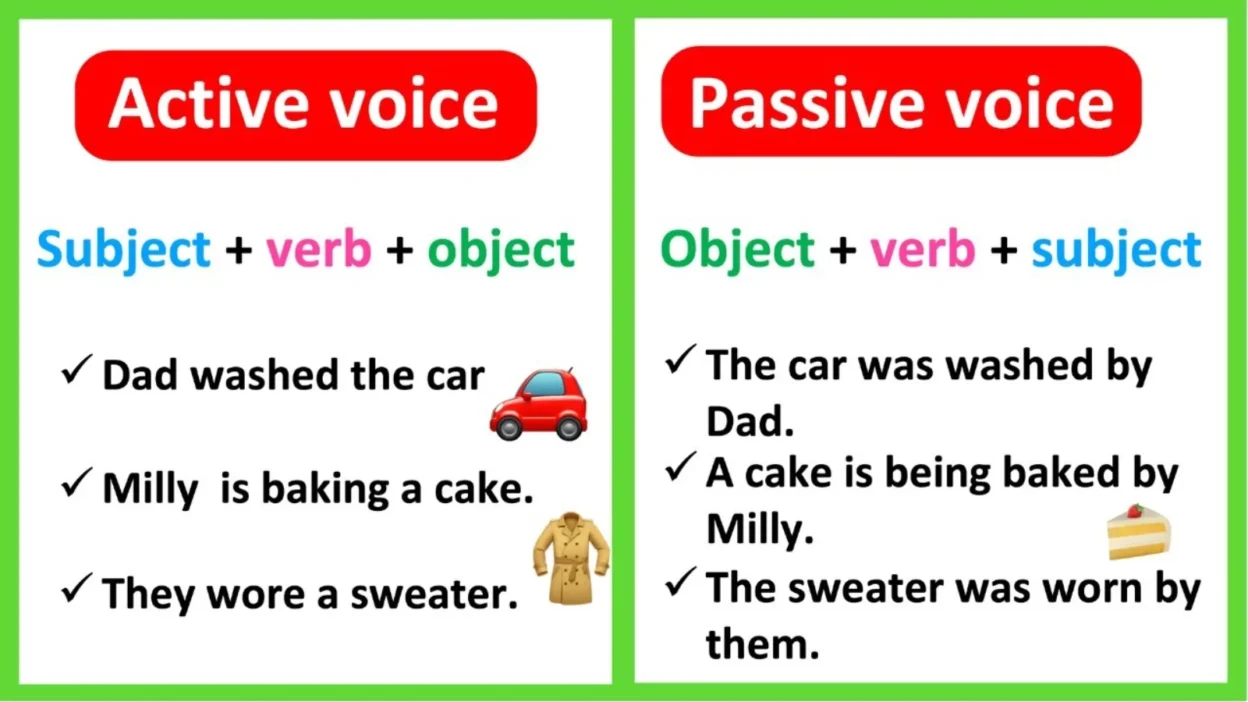
In active voice, the subject does the action.
Simple definition:
👉 The subject acts on the object.
Basic Structure of Active Voice
| Part | Example |
| Subject | She |
| Verb | writes |
| Object | a letter |
Sentence:
✔️ She writes a letter.
Here, she is doing the action (writes).
Why Active Voice Is Important
Active voice is preferred in most situations because it is:
- Clear and easy to understand
- Short and direct
- Natural for conversation
- Strong for writing and speaking
Real-Life Example
❌ Passive voice:
The meal was cooked by my mother.
✔️ Active voice:
My mother cooked the meal.
The active sentence sounds more natural and friendly.
Active Voice vs Passive Voice (Quick Comparison)
| Active Voice | Passive Voice |
| Subject does the action | Action is done to the subject |
| Clear and direct | Often longer and unclear |
| Common in daily English | Common in formal writing |
| Strong and confident | Neutral or indirect |
How to Identify Active Voice
Ask this simple question:
👉 Who is doing the action?
If the subject is clearly doing the action, the sentence is in active voice.
Examples
- The cat chased the mouse. → Active
- John cleaned the room. → Active
- They are watching a movie. → Active
Active Voice Sentence Examples (Everyday Use)
Here are some real-life active voice examples:
- I drink coffee every morning.
- She teaches English online.
- We finished our homework.
- The baby cried loudly.
- He opened the door slowly.
All these sentences clearly show who is doing the action.
Active Voice in Different Tenses
Active voice works in all tenses.
Present Simple
- She reads books.
- They play football.
Present Continuous
- He is writing an email.
- We are learning grammar.
Past Simple
- She called her friend.
- I watched the movie.
Future Simple
- They will start the project.
- I will help you.
Active Voice in Questions
Active voice is also used in questions.
Examples:
- Did you finish your work?
- Is she cooking dinner?
- Will they attend the meeting?
These sound natural and conversational.
Active Voice in Negative Sentences
Negative sentences can also be active.
Examples:
- I did not understand the lesson.
- She does not like tea.
- They will not come today.
Common Mistakes Learners Make with Active Voice
❌ Mistake 1: Unclear Subject
Was done the work quickly.
✔️ Correct:
He did the work quickly.
❌ Mistake 2: Overusing Passive Voice
The rules were explained by the teacher.
✔️ Better (active):
The teacher explained the rules.
❌ Mistake 3: Missing the Doer
The window was broken.
✔️ Active (if known):
The boy broke the window.
When Should You Use Active Voice?
Use active voice when you want to:
- Speak naturally
- Write blogs or articles
- Tell stories
- Explain ideas
- Write emails or messages
Best Places to Use Active Voice
- Daily conversation
- School essays
- SEO content
- Social media posts
- Storytelling
When Passive Voice Is Better (Brief Note)
Sometimes passive voice is used when:
- The doer is unknown
- The action is more important
- Formal or scientific writing
But for learning English, always start with active voice.
Practice: Change Passive to Active Voice
Try converting these sentences:
- The cake was eaten by the child.
→ The child ate the cake. - The book was written by the author.
→ The author wrote the book. - The room was cleaned by Sarah.
→ Sarah cleaned the room.
Quick Practice Sentences (Fill in the Blank)
- She ___ (write) a letter.
- They ___ (play) cricket.
- He ___ (fix) the computer.
Answers: writes, play, fixed
Active Voice for SEO & Clear Writing
Modern SEO (including Google AI results) prefers clear, direct sentences. Active voice helps because:
- It improves readability
- It reduces confusion
- It sounds human
- It works well for featured snippets
Example (Snippet-Friendly)
Question: What is active voice?
Answer: Active voice is when the subject of a sentence performs the action.
Frequently Asked Questions (FAQ)
What is active voice in simple words?
Active voice means the subject does the action in a sentence.
Is active voice better than passive voice?
Yes, in most daily and learning situations, active voice is clearer and easier.
How can I recognize active voice?
Check if the subject is doing the action directly.
Can active voice be used in all tenses?
Yes, active voice works in present, past, and future tenses.
Why do teachers prefer active voice?
Because it makes writing strong, clear, and easy to understand.
Key Takeaways (Quick Summary)
- Active voice = subject does the action
- It is clear, simple, and natural
- Used in daily English and writing
- Better for beginners and SEO
- Avoid unnecessary passive sentences
Final Thoughts
Learning active voice is a big step toward speaking and writing better English. Start using it in your daily sentences, messages, and writing practice.