
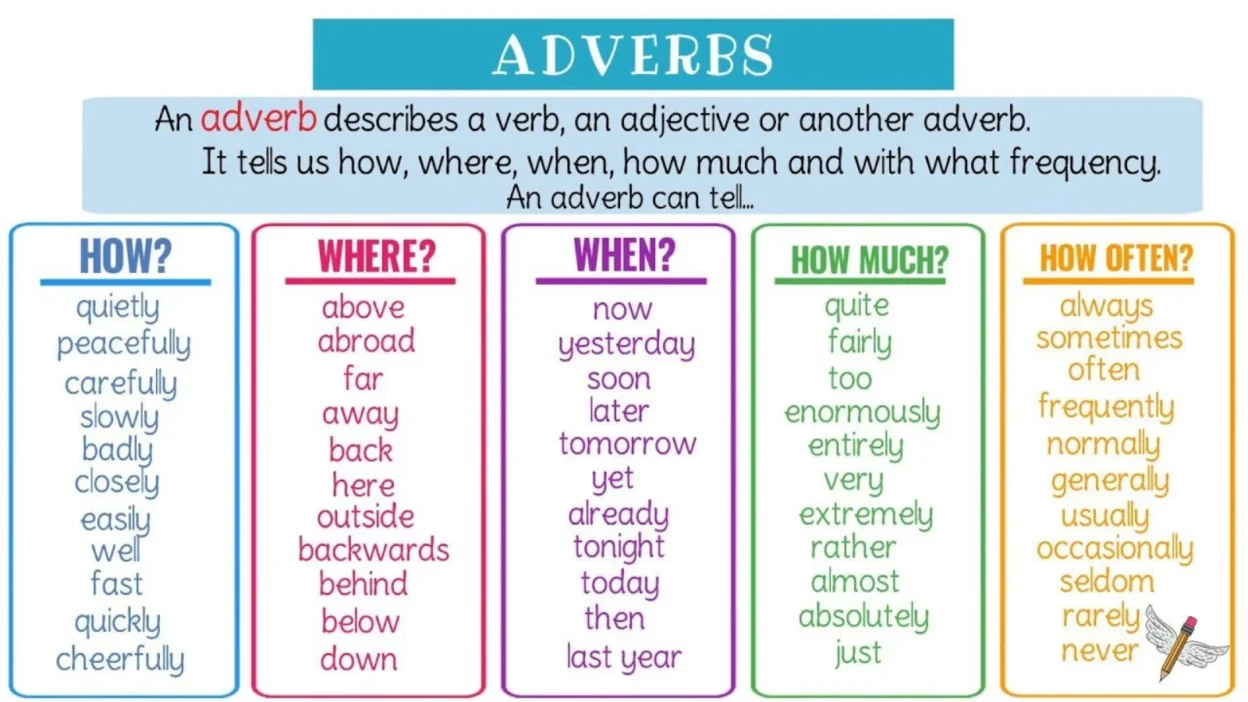
Adverbs in English are small words, but they play a big role in meaning. They tell us how, when, where, how often, and to what extent something happens.
If you already know nouns, verbs, and adjectives, learning adverbs will help you:
- Speak more clearly
- Write more naturally
- Sound more fluent and confident
This guide is written in simple English for beginner to intermediate learners. You will find clear explanations, real-life examples, practice sentences, and common mistakes to avoid.
Sorry Generator
What Are Adverbs in English? (Simple Definition)
Adverbs are words that describe or give more information about:
- a verb
- an adjective
- another adverb
- sometimes a whole sentence
Easy Example
- She speaks clearly.
(Clearly tells us how she speaks.)
In most cases, adverbs answer questions like:
- How?
- When?
- Where?
- How often?
- How much?
Why Are Adverbs Important in English?
Without adverbs, sentences sound incomplete or boring.
Compare:
- He finished the work.
- He finished the work quickly.
The second sentence gives more information and sounds more natural.
Adverbs help you:
- Add detail
- Show emotion
- Be precise
- Avoid repeating long explanations
Common Types of Adverbs in English
There are many types of adverbs, but beginners should focus on these main categories.
Adverbs of Manner (How?)
Adverbs of manner tell us how an action happens.
Common Adverbs of Manner
| Adverb | Example |
| quickly | She runs quickly. |
| slowly | He speaks slowly. |
| carefully | Drive carefully. |
| loudly | They laughed loudly. |
| politely | He spoke politely. |
Rule
Most adverbs of manner are formed by:
adjective + ly
- quick → quickly
- slow → slowly
- careful → carefully
Real-Life Examples
- Please listen carefully in class.
- The baby slept peacefully.
Adverbs of Time (When?)
Adverbs of time tell us when something happens.
Common Adverbs of Time
- today
- yesterday
- now
- later
- already
- soon
- recently
Examples
- I will call you later.
- She finished her homework yesterday.
- He is busy now.
Position Tip
Consecutive Sentences – Improved Version
The text contains three consecutive sentences that begin with the same word, so it is better to vary sentence openings to improve readability.
Adverbs of time usually appear at the end of a sentence. They can also be placed at the beginning for emphasis when needed.
Adverbs of Place (Where?)
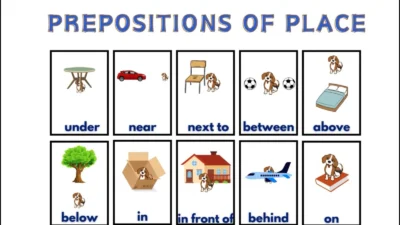
Adverbs of place explain where something happens. These words describe the location or position of an action. They usually come after the main verb or object in a sentence.
Examples:
The cat is hiding under the table. happens.
The children are playing outside.
She looked everywhere for her keys.
Common Adverbs of Place
- here
- there
- outside
- inside
- upstairs
- everywhere
Examples
- Come here, please.
- The children are playing outside.
- I looked everywhere for my keys.
Adverbs of Frequency (How Often?)
Adverbs of frequency tell us how often something happens.
Common Adverbs of Frequency
| Adverb | Frequency |
| always | 100% |
| usually | very often |
| often | many times |
| sometimes | occasionally |
| rarely | not often |
| never | 0% |
Examples
- I always wake up early.
- She sometimes drinks coffee.
- He never lies.
Sentence Position (Important!)
Adverbs of frequency usually come:
- before the main verb
- after “to be”
Examples:
- She often reads books.
- He is always late.
Adverbs of Degree (How Much?)
Adverbs of degree tell us how much or to what extent something happens.
Common Adverbs of Degree
- very
- too
- quite
- almost
- enough
- extremely
Examples
- The movie was very interesting.
- She is too tired to work.
- He almost finished the task.
Forming Adverbs in English
1. Adverbs Ending in -ly
Most adverbs are formed by adding -ly to adjectives.
| Adjective | Adverb |
| slow | slowly |
| happy | happily |
| easy | easily |
| loud | loudly |
Spelling Changes
- happy → happily
- easy → easily
2. Irregular Adverbs (No -ly)
Some adverbs do not follow the -ly rule.
| Adjective | Adverb |
| good | well |
| fast | fast |
| hard | hard |
| late | late |
Examples:
- She sings well.
- He works hard.
⚠️ Common mistake:
❌ She sings good.
✅ She sings well.
Adjective vs Adverb: Common Confusion
Many learners mix adjectives and adverbs.
Key Rule
- Adjectives describe nouns
- Adverbs describe verbs
Compare
- She is a quick runner. (adjective)
- She runs quickly. (adverb)
Position of Adverbs in Sentences
Adverbs can appear in different places, depending on type.
Common Positions
- Beginning: Suddenly, it started raining.
- Middle: She always helps me.
- End: He spoke clearly.
There is no single rule, but natural English usage matters most.
Common Mistakes with Adverbs in English
Mistake 1: Using adjective instead of adverb
❌ He drives dangerous.
✅ He drives dangerously.
Mistake 2: Double adverbs
❌ She spoke very loudlyly.
✅ She spoke very loudly.
Mistake 3: Wrong position
❌ He eats always breakfast.
✅ He always eats breakfast.
Practice Sentences (Try Yourself)
Fill in the blanks with the correct adverb:
- She answered the question ______ (polite).
- I ______ forget my keys. (never / always)
- The train arrived ______. (late / lately)
- Please speak ______. (clear)
Answers:
- politely
- never / always (depending on meaning)
- late
- clearly
Real-Life Conversation Examples
- “Can you speak slowly, please?”
- “I usually work from home.”
- “It’s too cold today.”
These are common, natural sentences used in daily English.
Adverbs in Spoken vs Written English
- In spoken English, adverbs are often simple:
- really, very, so, too
- In written English, adverbs add clarity:
- carefully, formally, clearly
Both are important for fluency.
FAQ: Adverbs in English (People Also Ask)
What is an adverb in simple words?
An adverb is a word that gives more information about a verb, adjective, or another adverb.
How do I identify an adverb in a sentence?
Ask questions like how, when, where, or how often. Many adverbs end in -ly, but not all.
Are all words ending in -ly adverbs?
No. Some adjectives also end in -ly, like friendly or lovely.
Where should adverbs be placed in a sentence?
It depends on the type of adverb, but usually before the verb, after “to be”, or at the end of the sentence.
What is the difference between good and well?
Good is an adjective. Well is an adverb.
Example: She is good at math. She studies well.
Quick Summary: Key Takeaways
- Adverbs describe how, when, where, how often, and how much
- Most adverbs end in -ly
- Some adverbs are irregular
- Word order matters, especially with frequency adverbs
- Avoid common mistakes like using adjectives instead of adverbs
Final Tip & Soft CTA
The best way to master adverbs in English is practice and exposure. Try:
- Reading short articles
- Listening to conversations
- Writing 5 sentences every day using new adverbs