Sorry Generator
Introduction to Basic English
Basic English is the foundation of learning the English language. It helps beginners understand how English works in daily life—how to speak, read, write, and listen with confidence.
If you are a beginner or an intermediate learner, learning Basic English will help you:
- Communicate in simple situations
- Understand common English sentences
- Improve speaking and writing step by step
This guide is written in simple, clear English, especially for non-native learners. You will find real-life examples, practice sentences, common mistakes, and easy explanations.
What Is Basic English?
Basic English means using simple words, short sentences, and clear grammar to communicate effectively.
It focuses on:
- Common vocabulary
- Simple grammar rules
- Everyday conversation
Example:
❌ I am endeavoring to acquire linguistic proficiency.
✅ I am learning English.
Basic English avoids difficult words and complex sentence structures.
Why Learning Basic English Is Important
Learning Basic English gives you a strong base for advanced English later.
Benefits of Basic English:
- Helps in daily conversation
- Improves confidence
- Makes learning faster
- Useful for travel, work, and study
Many English learners fail because they skip Basic English and jump into advanced grammar.
Basic English Sentence Structure
English sentences usually follow this order:
Subject + Verb + Object
Examples:
- I eat food.
- She likes coffee.
- They play cricket.
Common Mistake:
❌ Eat I food.
✅ I eat food.
Parts of Speech in Basic English
Understanding parts of speech is very important in Basic English.
| Part of Speech | Example | Sentence |
| Noun | book | I read a book. |
| Verb | eat | I eat rice. |
| Adjective | big | It is a big house. |
| Pronoun | he | He is my friend. |
| Preposition | in | The cat is in the box. |
Basic English Tenses (Simple Explanation)
1. Present Simple Tense
Used for daily habits and facts.
Structure: Subject + verb
Examples:
- I wake up early.
- She works in an office.
2. Past Simple Tense
Used for completed actions.
Examples:
- I watched a movie.
- They played football.
3. Future Simple Tense
Used for future plans.
Examples:
- I will call you.
- She will travel tomorrow.
Basic English Questions
Yes/No Questions
Structure: Helping verb + subject + main verb
Examples:
- Do you like tea?
- Is he your brother?
WH Questions
Examples:
- What is your name?
- Where do you live?
- Why are you sad?
Common Basic English Vocabulary (Daily Use)
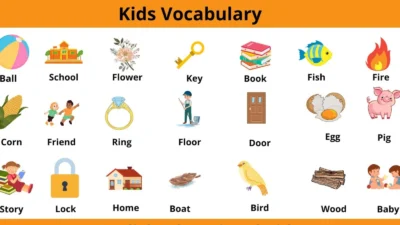
Daily Life Words
- food
- water
- house
- school
- work
Action Words
- go
- eat
- drink
- sleep
- study
Describing Words
- good
- bad
- big
- small
- happy
Basic English Conversation Examples
Example 1: Greeting
A: Hello! How are you?
B: I’m fine, thank you.
In the Second Situation: Asking for Help
A: Can you help me?
B: Yes, of course.
Another Common Situation: At a Shop
A: How much is this?
B: It costs five dollars.
What Changed?
Instead of repeating:
- Example 1
- Example 2
- Example 3
We used different transitions:
- In the second situation
- Another common situation
Common Mistakes in Basic English (And Fixes)
Mistake 1: Missing Articles
❌ I have pen.
✅ I have a pen.
Mistake 2: Wrong Verb Form
❌ She go to school.
✅ She goes to school.
Mistake 3: Word Order
❌ Very I am happy.
✅ I am very happy.
Basic English Practice Sentences
Try reading and speaking these sentences:
- I like learning English.
- This is my favorite book.
- We live in a small city.
- He is my best friend.
- I want to improve my English.
Basic English for Speaking Confidence
Tips to Improve Speaking:
- Speak slowly
- Use short sentences
- Do not fear mistakes
- Practice daily
Example:
Instead of saying nothing, say:
- I am learning.
- Please repeat.
- I don’t understand.
Basic English for Writing
Simple Writing Tips:
- Use short sentences
- Use common words
- Avoid long paragraphs
Example:
❌ Due to unforeseen circumstances, I was unable to attend.
✅ I could not come because of a problem.
Basic English for Reading
Start with:
- Children’s stories
- Simple news articles
- Short paragraphs
Read aloud to improve pronunciation.
Basic English Grammar Rules (Quick List)
- Use a/an for one thing
- Use the for something specific
- Add -s with he/she/it
- Use do/does for questions
Featured Snippet Example: Basic English Definition
Basic English is a simplified form of English that uses common words and simple grammar to help beginners communicate clearly in everyday situations.
FAQ: Basic English (People Also Ask)
What is Basic English?
Basic English is a simple form of English that focuses on common words and easy grammar for beginners.
How long does it take to learn Basic English?
Most learners can understand Basic English in 2–3 months with daily practice.
Is Basic English enough for speaking?
Yes, Basic English is enough for daily conversation and simple communication.
Can adults learn Basic English?
Yes, adults can learn Basic English at any age.
What is the best way to practice Basic English?
Practice speaking daily, read simple texts, and write short sentences.
Schema-Ready FAQ (For SEO 2026)
Question: What is Basic English?
Answer: Basic English is a simplified form of English designed for beginners to communicate easily using simple words and grammar.
Question: Who should learn Basic English?
Answer: Beginners, ESL learners, students, and adults who want to improve everyday communication.
Key Takeaways: Basic English
- Basic English is the foundation of learning English
- Focus on simple words and sentences
- Practice daily with real-life examples
- Mistakes are part of learning
Final Thoughts & Soft CTA
Learning Basic English is the first and most important step toward fluent English. Start small, practice daily, and stay consistent.