
English grammar can feel tricky—especially if it’s not your first language. Many learners make the same grammar mistakes again and again, not because they are careless, but because English has many confusing rules and exceptions.
The good news?
Once you understand the most common English grammar mistakes, you can fix them step by step and sound more natural and confident.
In this guide, you’ll learn:
- The most frequent grammar mistakes learners make
- Simple explanations (no complex grammar words)
- Real-life examples and corrected sentences
- Practice tips you can use right away
This article is written for beginner to intermediate English learners, using clear, friendly English.
Sorry Generator
Why Do English Grammar Mistakes Happen?
Grammar mistakes are normal. Even native speakers make them.
Here are a few common reasons:
- English spelling and pronunciation don’t always match
- One rule often has many exceptions
- Learners translate directly from their native language
- Some grammar rules are rarely explained clearly
Understanding why mistakes happen helps you avoid them in the future.
1. Using the Wrong Verb Tense
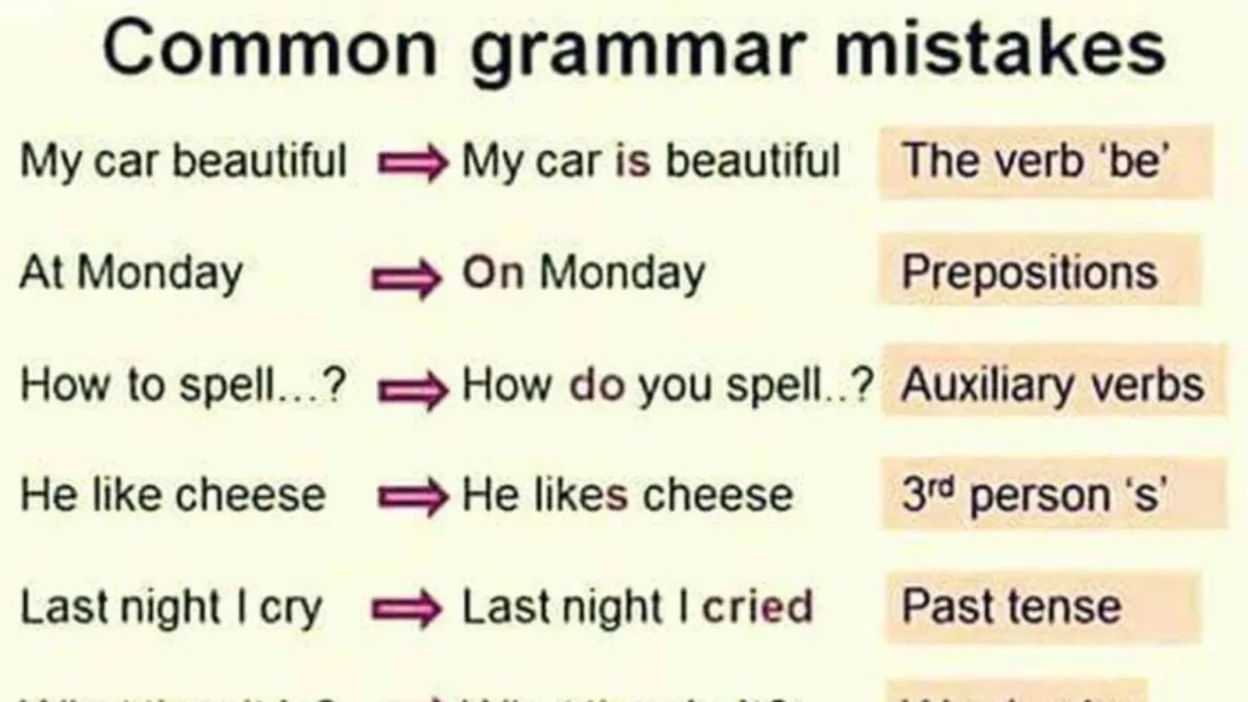
Verb tense shows when something happens. This is one of the most common English grammar mistakes.
❌ Common mistakes
- Yesterday, I go to the market.
- I have see that movie.
✅ Correct sentences
- Yesterday, I went to the market.
- I have seen that movie.
Simple rule
- Use past simple for finished actions in the past
- Use present perfect for experiences or results
Practice
Choose the correct verb:
- I ___ (eat) breakfast already.
➡️ have eaten
2. Confusing “He”, “She”, and “They”
Many learners mix up subject pronouns.
❌ Common mistakes
- My brother is a doctor. She works in a hospital.
- Anna and Tom is here. He are waiting.
✅ Correct sentences
- My brother is a doctor. He works in a hospital.
- Anna and Tom are here. They are waiting.
Tip
- He = male
- She = female
- They = plural (more than one person)
3. Incorrect Use of Articles (a, an, the)
Articles are small words, but they cause big problems.
❌ Common mistakes
- She bought new phone.
- I went to the school yesterday. (when not specific)
✅ Correct sentences
- She bought a new phone.
- I went to school yesterday.
Quick guide
| Article | When to use it |
| a / an | First time, not specific |
| the | Specific or already known |
| no article | General ideas |
4. Mixing Up “Much” and “Many”
❌ Common mistakes
- How much friends do you have?
- I don’t have many money.
✅ Correct sentences
- How many friends do you have?
- I don’t have much money.
Easy rule
- Much → uncountable nouns (water, money, time)
- Many → countable nouns (books, friends, apples)
5. Subject-Verb Agreement Errors
The verb must match the subject.
❌ Common mistakes
- She go to work every day.
- They likes coffee.
✅ Correct sentences
- She goes to work every day.
- They like coffee.
Remember
- He / She / It → verb + s
- I / You / We / They → base verb
6. Using the Wrong Preposition
Prepositions are very common—and very confusing.
❌ Common mistakes
- She is married with a teacher.
- I arrived to the airport.
✅ Correct sentences
- She is married to a teacher.
- I arrived at the airport.
Common prepositions to remember
- Married to
- Interested in
- Good at
- Afraid of
7. Confusing “Your” and “You’re”
This mistake often appears in writing.
❌ Common mistakes
- Your welcome!
- Your going to love this.
✅ Correct sentences
- You’re welcome!
- You’re going to love this.
Simple trick
- You’re = you are
- Your = shows possession
8. Double Negatives
In English, one negative is enough.
❌ Common mistakes
- I don’t need nothing.
- She didn’t see nobody.
✅ Correct sentences
- I don’t need anything.
- She didn’t see anybody.
9. Incorrect Plural Forms
Some plurals are irregular.
❌ Common mistakes
- Two childs
- Many informations
✅ Correct sentences
- Two children
- Much information
Common irregular plurals
- child → children
- man → men
- woman → women
- person → people
10. Sentence Fragments (Incomplete Sentences)
A sentence needs:
- A subject
- A verb
❌ Common mistakes
- Because I was tired.
- After the meeting.
✅ Correct sentences
- I went home because I was tired.
- We talked after the meeting.
Common English Grammar Mistakes: Quick Reference Table
| Mistake | Incorrect | Correct |
| Verb tense | I go yesterday | I went yesterday |
| Articles | She bought phone | She bought a phone |
| Pronouns | My sister, he… | My sister, she… |
| Prepositions | Married with | Married to |
Practice Section: Fix the Mistakes
Try correcting these sentences:
- He don’t like coffee.
- She have two brother.
- I am interesting in English.
Answers
- He doesn’t like coffee.
- She has two brothers.
- I am interested in English.
Frequently Asked Questions (FAQ)
What are the most common English grammar mistakes?
The most common English grammar mistakes include verb tense errors, wrong articles, incorrect prepositions, and subject-verb agreement problems.
Why do English learners make grammar mistakes?
Learners often translate directly from their native language or learn rules without enough real-life practice.
How can I improve my English grammar fast?
Practice daily, read simple English texts, correct your mistakes, and focus on one grammar topic at a time.
Are grammar mistakes a big problem?
No. Mistakes are part of learning. Clear communication is more important than perfect grammar.
Do native speakers make grammar mistakes?
Yes. Native speakers also make grammar mistakes, especially in casual speech and writing.
Key Takeaways
- Grammar mistakes are normal and fixable
- Focus on common English grammar mistakes first
- Learn rules with real examples
- Practice a little every day
- Don’t be afraid to make mistakes
Final Tip 🌟
Improving grammar is not about being perfect—it’s about being clear and confident. Start with these common mistakes, practice often, and you’ll see real progress.