

Daily English is the English we use in real life—at home, at work, in shops, on the phone, and with friends. It is simple, practical, and focused on communication, not difficult grammar rules.
If you are a beginner or intermediate learner, improving your Daily English can help you:
- Speak more confidently
- Understand native speakers better
- Use English naturally in everyday situations
This guide explains Daily English in clear language, with examples, common mistakes, and practice sentences you can use right away.
Sorry Generator
What Is Daily English?
Daily English means common English words, phrases, and sentences used in everyday life. It is different from academic or business English.
Daily English focuses on:
- Short sentences
- Common vocabulary
- Natural expressions
- Real-life situations
Examples of Daily English
- “How are you?”
- “What are you doing?”
- “I’m feeling tired today.”
- “Can you help me?”
These sentences are simple, but they are used every day by native speakers.
Why Learning Daily English Is Important
Learning Daily English helps you communicate without stress. You do not need perfect grammar to start speaking.
Benefits of Daily English
- Helps in conversations with friends and colleagues
- Useful for travel and daily tasks
- Builds confidence step by step
- Improves listening and speaking together
Daily English is the foundation of fluent English.
Daily English Vocabulary for Everyday Use
Here are some common Daily English words and their meanings:
| Word | Meaning | Example |
| Busy | Having a lot to do | I’m busy right now |
| Tired | Needing rest | I feel tired today |
| Hungry | Wanting food | I’m hungry |
| Help | To assist | Can you help me? |
| Ready | Prepared | I’m ready to go |
Common Daily English Sentences (With Examples)
Daily English for Greetings
- Hello!
- Hi, how are you?
- Good morning
- Nice to meet you
Real-life example:
You meet a neighbor:
“Hi, how are you?”
“I’m fine, thanks. And you?”
Daily English for Daily Activities
- I wake up early
- I go to work
- I study English every day
- I watch TV at night
Example:
“I study English every day to improve my speaking.”
Daily English for Asking Questions
- What is your name?
- Where are you from?
- What time is it?
- How much is this?
These questions are very common in daily conversations.
Daily English for Real-Life Situations
At Home
- I’m cleaning my room
- Dinner is ready
- I’m watching TV
- Please turn off the light
At Work
- I’m at work right now
- I have a meeting today
- I’ll call you later
- Let’s take a break
In a Shop
- How much is this?
- Do you have this in blue?
- I want to buy this
- Can I pay by card?
On the Phone
- Hello, this is Ali
- Can I speak to Sara?
- I’ll call you back
- Sorry, wrong number
Simple Daily English Grammar (Beginner-Friendly)
Daily English uses basic grammar. You do not need complex rules.
Present Simple Tense
Used for daily habits.
Structure:
Subject + verb
Examples:
- I work every day
- She drinks tea
- We learn English
Present Continuous Tense
Used for actions happening now.
Structure:
Subject + am/is/are + verb + ing
Examples:
- I am studying English
- She is cooking food
- They are watching TV
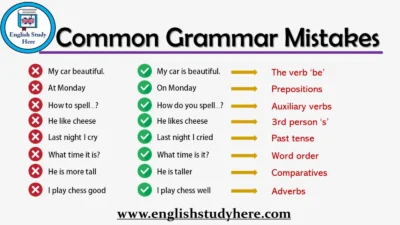
Common Daily English Mistakes (And Corrections)
Mistake 1: Using difficult words
❌ I am extremely fatigued
✅ I am very tired
Mistake 2: Wrong verb tense
❌ I am go to work
✅ I go to work
Mistake 3: Translating directly from your language
❌ What you want?
✅ What do you want?
Practice Sentences (Try Speaking Aloud)
Practice these Daily English sentences every day:
- I am learning Daily English
- I speak English a little
- Please speak slowly
- I don’t understand
- Can you repeat that?
Tip: Speak these sentences loudly to build confidence.
Daily English Conversation Example (Featured Snippet Style)
Person A: Hi, how are you?
Person B: I’m fine, thanks. How about you?
Person A: I’m good. What are you doing?
Person B: I’m studying English.
This is a simple Daily English conversation used worldwide.
Tips to Improve Daily English Fast
- Practice speaking every day
- Use simple sentences
- Watch English videos with subtitles
- Listen to real conversations
- Don’t be afraid of mistakes
Consistency is more important than perfection.
Daily English for Voice Search (Natural Questions)
People often ask questions like:
- How can I learn Daily English?
- What is Daily English used for?
- How do beginners speak English daily?
Short answer: Practice simple English every day in real-life situations.
FAQ: Daily English (People Also Ask)
What is Daily English?
Daily English is simple English used in everyday conversations, such as greetings, daily activities, and common situations.
Is Daily English easy to learn?
Yes. Daily English uses simple words and short sentences, making it easy for beginners.
How long does it take to learn Daily English?
With daily practice, you can start speaking basic Daily English in a few weeks.
Can I learn Daily English without grammar?
You need basic grammar, but Daily English focuses more on speaking and understanding.
Is Daily English enough for fluent English?
Daily English is the first step. It builds a strong foundation for advanced English later.
Key Takeaways: Daily English
- Daily English is simple and practical
- Focus on common words and sentences
- Use English in real-life situations
- Practice speaking every day
- Mistakes are part of learning
Final Words (Soft CTA)
Daily English is the best place to start your English journey. Practice a few sentences every day, speak without fear, and slowly build confidence.