
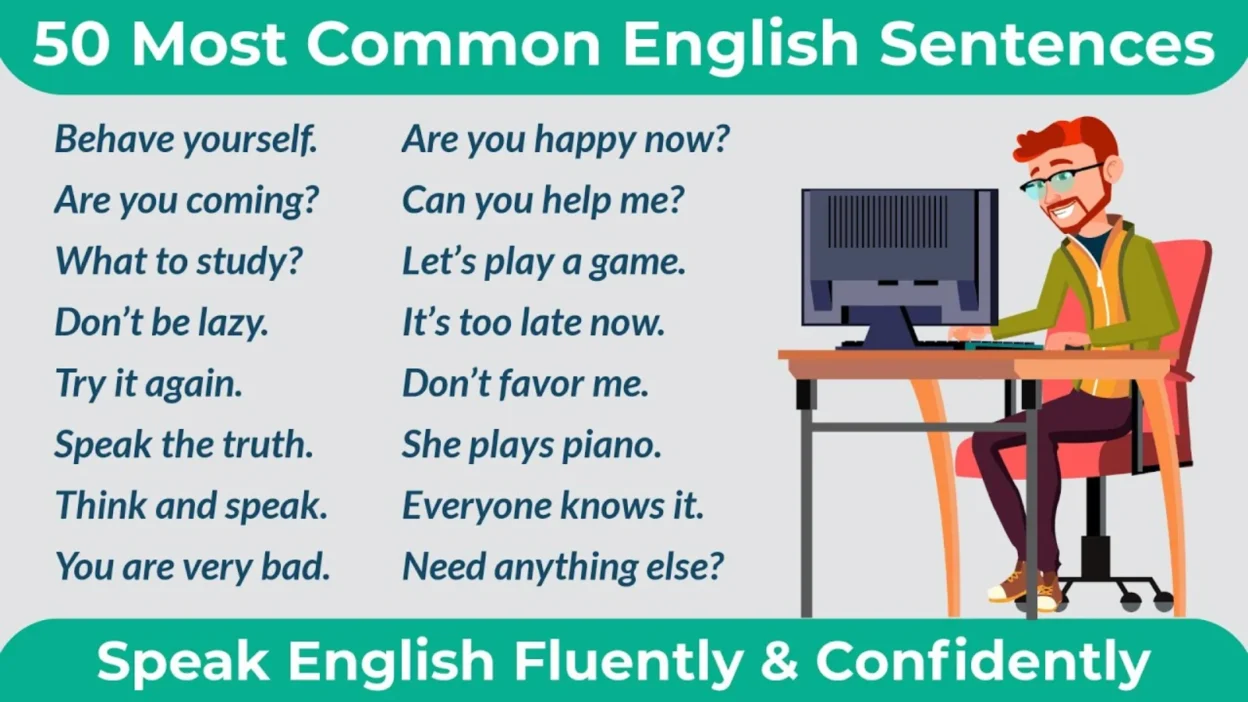
Learning English common sentences is one of the fastest and most practical ways to improve your spoken and written English. Instead of memorizing difficult grammar rules, you can start communicating confidently by using sentences people actually say every day.
This guide is written in simple, clear English for beginner to intermediate learners. You’ll find real-life examples, practice sentences, common mistakes, and easy explanations you can use immediately in daily life.
Sorry Generator
What Are English Common Sentences?
English common sentences are short, frequently used sentences that native and non-native speakers use in everyday situations, such as:
- Talking to friends and family
- Shopping or ordering food
- School, office, or workplace conversations
- Online chats and emails
These sentences are usually:
- Easy to understand
- Grammatically simple
- Very useful in real life
Example
- How are you?
- Can you help me?
- I don’t understand.
Learning these sentences helps you think in English, not translate from your own language.
Why English Common Sentences Are Important for Learners
Many learners know vocabulary but still feel shy when speaking. The reason is simple: they don’t know how to form natural sentences quickly.
English common sentences help you:
- Speak more confidently
- Understand native speakers better
- Improve listening and pronunciation
- Use correct grammar naturally
Instead of learning English word by word, you learn it sentence by sentence.
English Common Sentences for Daily Conversation
Greetings and Basic Communication
These are some of the most common English sentences used every day.
- Hello! How are you?
- I’m fine, thank you.
- Nice to meet you.
- How’s your day going?
- Long time no see.
Real-life example:
Hello! How are you today?
I’m good. How about you?
Asking for Help and Information
These sentences are extremely useful in schools, offices, and public places.
- Can you help me?
- Could you please explain this?
- I don’t understand this part.
- What does this mean?
- Can you repeat that, please?
Common mistake:
❌ You help me?
✅ Can you help me?
English Common Sentences for Daily Life Situations
At Home
- I’m tired today.
- Let’s eat dinner.
- Please turn off the lights.
- I need some rest.
- What are you doing?
At School or College
- I have a question.
- Can you explain again?
- I forgot my homework.
- When is the exam?
- I don’t know the answer.
English Common Sentences for the Workplace
Using correct and polite English at work is very important.
Polite and Professional Sentences
- I’ll get back to you soon.
- Please let me know.
- Thank you for your time.
- I agree with you.
- Let’s discuss this later.
Example:
Please let me know if you need any help.
English Common Sentences for Shopping and Travel
Shopping
- How much is this?
- Do you have this in another size?
- I’m just looking.
- That’s too expensive.
- I’ll take this.
Travel
- Where is the restroom?
- How can I get there?
- I need a taxi.
- What time is the bus?
- Is this seat free?
Common Sentence Structures You Should Know
Understanding simple sentence structures makes learning easier.
✅ Improved Version (More Variety)
✅ Improved Sentences (Mixed Structure)
- Every day, I work.
- She sleeps peacefully at night.
- Outside, they play after school.
Subject + Verb + Object
- In the morning, I enjoy coffee.
- She reads books every evening.
- We ask for help when needed.
🔍 What Changed?
- I moved time phrases (every day, at night, after school) to different positions.
- I used varied sentence openings (not always starting with “I”, “She”, “They”).
- This makes writing sound more natural and engaging.
💡 Pro Tip (Important)
To avoid repetition:
- Start some sentences with time expressions → In the morning, At night
- Start some with place → Outside, At home
- Start some with conditions → When needed, If possible
⚡ Quick Practice
Try rewriting these with variety:
- I eat breakfast every day.
- She watches TV at night.
- They study after school.
Subject + Verb + Complement
- I am happy today.
- After a long day, he feels tired.
- They are ready for the trip.
🔑 What Changed?
- Added introductory phrases (e.g., At night, After school)
- Varied sentence openings to avoid repetition
- Kept the Subject + Verb structure clear
💡 Pro Tip
Instead of always starting with the subject, you can begin with:
- Time → In the morning, I work.
- Place → At home, she reads.
- Condition → When tired, he rests.
⚡ Quick Takeaway
Even simple sentences can sound better if you:
- Change how they begin
- Add small details
- Keep grammar structure intact
These patterns appear again and again in English common sentences.
Practice: English Common Sentences You Can Use Today
Try saying these sentences out loud:
- I am learning English.
- I want to improve my speaking.
- English is not difficult.
- I practice every day.
- I feel more confident now.
Tip: Practice in front of a mirror or record your voice.
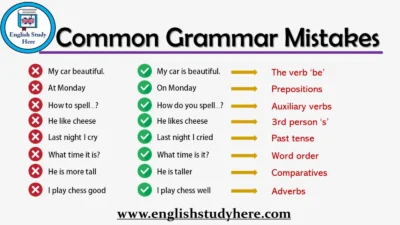
Common Mistakes Learners Make with English Sentences
1. Missing Helping Verbs
❌ I going to school.
✅ I am going to school.
2. Wrong Word Order
❌ I don’t know what is this.
✅ I don’t know what this is.
3. Overusing Direct Translation
Try to learn English common sentences as full units, not translated word by word.
English Common Sentences for Online Communication
With messaging and social media, these sentences are very useful.
- How’s it going?
- Let me know.
- Sounds good to me.
- I’ll message you later.
- Thanks for the update.
How to Remember English Common Sentences Easily
Here are some proven learning tips:
- Practice 5–10 sentences daily
- Use them in real conversations
- Write them in a notebook
- Listen to native speakers
- Repeat sentences aloud
Consistency is more important than speed.
FAQ: English Common Sentences (People Also Ask)
What are common English sentences?
Common English sentences are frequently used sentences in daily life that help learners communicate easily and naturally.
How many English sentences should I learn daily?
Learning 5 to 10 English common sentences daily is enough for steady improvement without feeling overwhelmed.
Are English common sentences good for beginners?
Yes, they are perfect for beginners because they are simple, practical, and used in real-life situations.
Can I become fluent by learning common sentences?
Learning common sentences builds a strong foundation. Combine them with listening, speaking, and practice for fluency.
How can I practice English common sentences at home?
You can practice by speaking aloud, writing sentences, watching English videos, and using them in daily conversations.
Key Takeaways: English Common Sentences
- English common sentences are essential for daily communication
- They help you speak confidently and naturally
- Focus on real-life usage, not memorization
- Practice a few sentences every day
- Avoid direct translation from your native language
Final Thoughts
Learning English common sentences is one of the smartest ways to improve your English in 2026. These sentences are simple, powerful, and used everywhere—at home, school, work, and online.