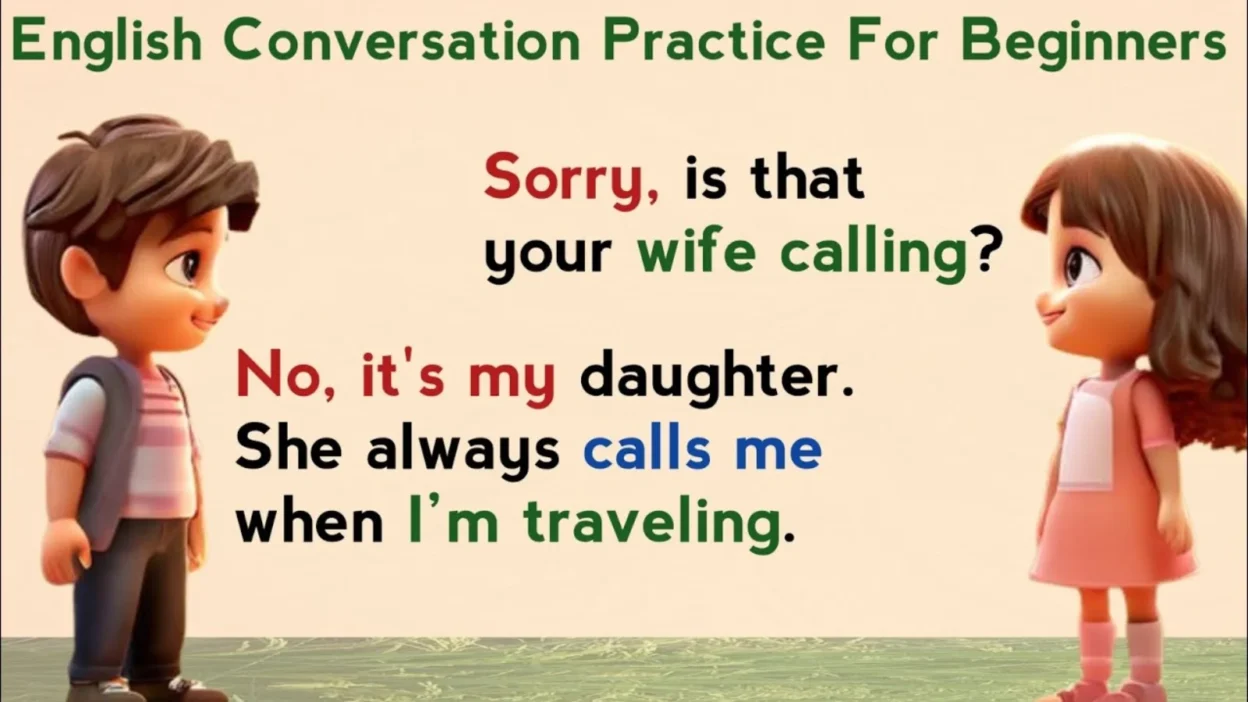
English conversation is the most important skill for learning English in real life. You may know grammar rules and vocabulary, but without conversation practice, speaking feels hard.
This guide is written for beginner to intermediate English learners. The language is simple, clear, and practical. You will learn how English conversation works in daily life, how to start speaking, and how to avoid common mistakes.
Whether you want to speak English for study, work, travel, or daily life, this article will help you build confidence step by step.
Sorry Generator
What Is English Conversation?
English conversation means talking with other people in English. It can be:
- Speaking face to face
- Talking on the phone
- Chatting online
- Asking and answering questions
Conversation is not about perfect grammar. It is about clear communication.
Example:
A: How are you?
B: I’m fine, thank you. And you?
This is a simple English conversation. Short, natural, and useful.
Why English Conversation Is Important
English conversation helps you:
- Express your thoughts clearly
- Understand native and non-native speakers
- Improve pronunciation and listening
- Feel confident in real situations
Many learners study English for years but still feel afraid to speak. The solution is regular conversation practice.
Basic English Conversation Structure
Most English conversations follow a simple pattern:
- Greeting
- Question or topic
- Response
- Follow-up
- Ending
Example:
Hello!
How are you today?
I’m good. How about you?
I’m fine too.
Nice talking to you. Bye!
You can use this structure in many situations.
Common English Conversation Topics for Beginners
Here are easy and common topics to start English conversation:
- Daily routine
- Family
- Work or study
- Hobbies
- Weather
- Food
- Travel
Example:
What do you do?
I am a student.
What do you study?
I study computer science.
Daily English Conversation Examples (Real Life)
At Home
Please close the door.
I am watching TV.
Dinner is ready.
At School
What is today’s lesson?
I don’t understand this topic.
Can you explain it again?
At Work
Can you help me with this?
I will finish it today.
Let’s have a meeting tomorrow.
Simple English Conversation Sentences You Can Use Daily
- How are you?
- What are you doing?
- Can you help me?
- I don’t understand.
- Please repeat that.
- Thank you very much.
- See you later.
These sentences are small but very powerful.
How to Start an English Conversation
Many learners ask: How do I start speaking English?
Use these simple openers:
- Hi, how are you?
- Excuse me, can I ask a question?
- Hello, nice to meet you.
- What do you think about this?
Tip:
Smile and speak slowly. Confidence grows with practice.
How to Continue a Conversation
To keep an English conversation going, ask follow-up questions.
Example:
A: Where are you from?
B: I’m from Pakistan.
A: Oh nice! Which city?
Useful follow-up words:
- Why
- How
- When
- What about you?
Polite English Conversation Phrases
Politeness is very important in English.
Use these phrases:
- Please
- Thank you
- Sorry
- Excuse me
- May I…?
Example:
Excuse me, may I sit here?
Thank you for your help.
Common English Conversation Mistakes (And How to Fix Them)
Mistake 1: Translating from your native language
Fix: Think in English, use simple sentences.
Mistake 2: Fear of making mistakes
Fix: Mistakes are part of learning. Speak anyway.
Mistake 3: Speaking too fast
Fix: Speak slowly and clearly.
Mistake 4: Using difficult words
Fix: Simple English is better than complex English.
English Conversation Practice Table
| Situation | Question | Answer |
| Greeting | How are you? | I’m fine, thanks |
| Work | Are you busy? | A little, yes |
| Study | What are you learning? | I’m learning English |
| Travel | Where are you going? | I’m going to Lahore |
English Conversation for Phone Calls
Phone conversations are harder because you cannot see the person.
Useful phrases:
- Hello, this is Ali speaking
- Can I speak to…?
- Please hold on
- I will call you later
Example:
Hello, this is Ali.
Hi Ali, this is John.
English Conversation for Online Chat
Online conversation is more relaxed.
Common chat phrases:
- Hi
- How’s it going?
- LOL
- See you
- Take care
Always be polite, even in chats.
How to Improve English Conversation Skills Faster
Here are proven tips from English teachers and learners:
- Practice daily (even 10 minutes)
- Speak with friends or partners
- Watch English videos with subtitles
- Repeat sentences aloud
- Record your voice and listen
Experience shows that daily speaking gives the best results.
English Conversation Practice Exercise
Fill in the blanks:
A: ___ are you?
B: I’m ___, thank you.
A: What ___ you doing?
B: I’m ___ English.
Answers:
How / fine / are / learning
Voice Search Friendly Examples (Featured Snippet Style)
Question: How can I improve my English conversation?
Answer: Practice speaking daily, use simple sentences, listen carefully, and don’t fear mistakes.
Question: Is grammar important in English conversation?
Answer: Basic grammar helps, but clear communication is more important than perfect grammar.
FAQ: English Conversation (People Also Ask)
What is the best way to learn English conversation?
The best way is daily speaking practice with simple sentences and real-life topics.
Can I learn English conversation without a teacher?
Yes. You can practice with friends, apps, videos, and self-speaking exercises.
How long does it take to improve English conversation?
With daily practice, beginners can see improvement in 2–3 months.
Is English conversation hard for beginners?
No. If you start with easy words and short sentences, it becomes simple.
Should I focus on grammar or conversation first?
Conversation first. Grammar improves naturally with speaking.
Key Takeaways: English Conversation
- English conversation is about communication, not perfection
- Start with simple sentences
- Practice daily in real situations
- Mistakes help you learn
- Confidence grows with use
Final Words
Learning English conversation is a journey. You don’t need perfect English to start speaking. You need practice, patience, and confidence.