
Sorry Generator
Introduction: Why English Examples Matter
If you want to improve your English, examples are your best teacher. Grammar rules can feel confusing, but English examples show how the language really works in daily life.
In this guide, you will learn English through clear examples, short explanations, and real-life sentences. This article is designed especially for beginner and intermediate learners who want to speak, write, and understand English with confidence.
We will cover common grammar topics, sentence patterns, and everyday usage using simple English examples that are easy to remember and use.
What Are English Examples?
English examples are sample sentences that show how words, grammar rules, or structures are used in real situations.
They help you:
- Understand meaning clearly
- Learn correct sentence structure
- Avoid common grammar mistakes
- Improve speaking and writing naturally
Simple Example
Rule: Use present simple for daily habits
Example: I wake up early every day.
English Examples for Basic Sentence Structure
1. Subject + Verb + Object
This is the most common sentence pattern in English.
Structure:
Subject + Verb + Object
Examples:
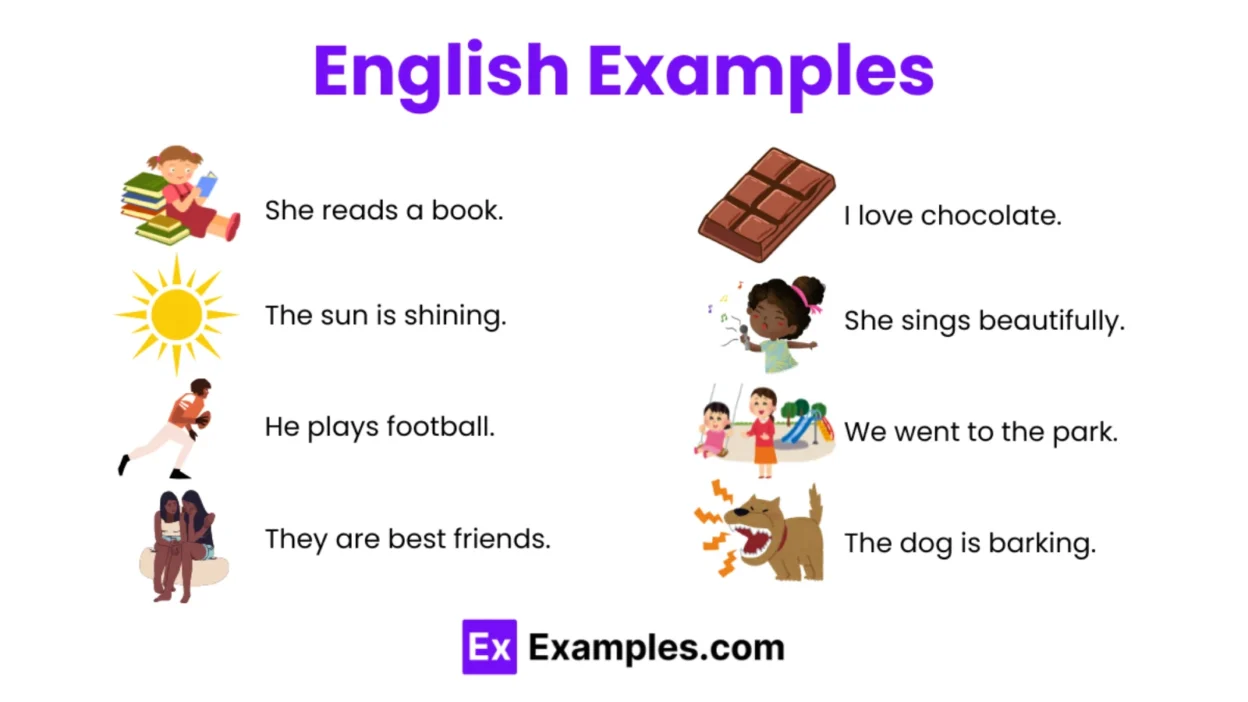
- I like tea.
- She reads books.
- They play football.
Common Mistake ❌
- Like I tea.
Correct ✅
- I like tea.
English Examples of Tenses (Easy Explanation)
Present Simple Tense Examples
Used for:
- Daily routines
- Facts
- Habits
Examples:
- I work in an office.
- She teaches English.
- We live in Pakistan.
Negative Examples:
- I do not like coffee.
- He does not drive a car.
Present Continuous Tense Examples
Used for:
- Actions happening now
Examples:
- I am learning English.
- She is cooking food.
- They are watching TV.
Common Mistake ❌
- I am learn English.
Correct ✅
- I am learning English.
Past Simple Tense Examples
Used for:
- Finished actions in the past
Examples:
- I visited Lahore yesterday.
- She called me last night.
- We watched a movie.
Future Tense Examples (Will)
Used for:
- Future plans or decisions
Examples:
- I will help you.
- She will start a job.
- They will travel tomorrow.
English Examples of Questions
Yes/No Question Examples
Structure:
Helping verb + subject + main verb
Examples:
- Do you like tea?
- Is she your teacher?
- Are they ready?
WH-Question Examples
Used words:
- What
- Where
- When
- Why
- How
Examples:
- What is your name?
- Where do you live?
- Why are you late?
English Examples of Negative Sentences
Present Simple Negatives
Examples:
- I do not understand this.
- She does not eat meat.
Past Simple Negatives
Examples:
- I did not go to school.
- They did not call me.
English Examples of Common Grammar Topics
Articles (A, An, The)
Examples:
- I saw a dog.
- She ate an apple.
- The sun is bright.
Common Mistake ❌
- She ate a apple.
Correct ✅
- She ate an apple.
Prepositions Examples
Examples:
- The book is on the table.
- He lives in Karachi.
- She arrived at school.
Adjective Examples
Adjectives describe nouns.
Examples:
- A beautiful flower
- A big house
- A happy child
Adverb Examples
Adverbs describe verbs.
Examples:
- She speaks clearly.
- He runs fast.
- They work hard.
English Examples for Daily Conversation
Greeting Examples
- Hello! How are you?
- Good morning!
- Nice to meet you.
Asking for Help
- Can you help me?
- Please explain this.
- Could you repeat that?
Polite Sentences
- Thank you very much.
- You’re welcome.
- Sorry for the delay.
English Examples: Common Mistakes and Corrections
| Wrong Sentence ❌ | Correct Sentence ✅ |
| She go to school | She goes to school |
| He don’t like tea | He doesn’t like tea |
| I am agree | I agree |
| More better | Better |
Practice English Examples (Try Yourself)
Fill in the Blanks
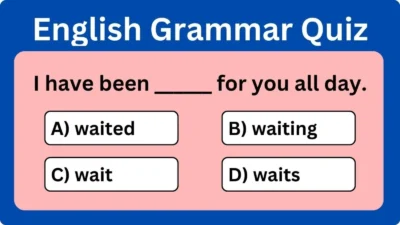
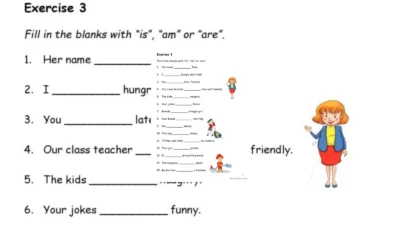
- She ___ learning English. (is / are)
- I ___ tea every morning. (drink / drinks)
- They ___ to school yesterday. (go / went)
Answers:
- is
- drink
- went
English Examples for Writing Short Paragraphs
Example Paragraph:
I am learning English every day. I read simple stories and practice speaking with friends. English examples help me understand grammar easily.
FAQ: English Examples (People Also Ask)
What are English examples?
English examples are sample sentences that show how words and grammar are used correctly in real life.
Why are examples important in learning English?
Examples make grammar easy, improve understanding, and help learners speak naturally.
Are English examples useful for beginners?
Yes, beginners learn faster when rules are explained with clear and simple examples.
How can I practice English examples daily?
Read example sentences, write your own, and use them in speaking practice.
Key Takeaways: English Examples Made Easy
- English examples make learning simple and practical
- Always learn grammar with real sentences
- Practice daily using short examples
- Avoid common mistakes by checking correct usage
Final Thoughts & Soft CTA
Learning English becomes easy when you focus on clear examples instead of difficult rules. Start using these English examples in your daily speaking and writing.