
Learning English becomes much easier when you practice regularly. English exercises help you understand grammar, build vocabulary, and use English confidently in real life. Whether you are a beginner or an intermediate learner, daily practice with the right exercises can improve your reading, writing, speaking, and thinking skills.
This guide is written in simple, clear English for non-native learners. You will find explanations, real-life examples, practice sentences, common mistakes, and short exercises you can try today.
Sorry Generator
Why English Exercises Are Important
English is not learned by reading rules only. It is learned by practice.
English exercises help you:
- Understand grammar step by step
- Use correct sentence structure
- Improve vocabulary naturally
- Avoid common mistakes
- Gain confidence in speaking and writing
Even 15–20 minutes of English exercises every day can make a big difference.
Types of English Exercises You Should Practice
Different exercises improve different skills. Below are the most useful types for beginners and intermediate learners.
Grammar Exercises
Grammar exercises help you learn how sentences are formed.
Common grammar topics include:
- Parts of speech (noun, verb, adjective)
- Tenses (present, past, future)
- Articles (a, an, the)
- Prepositions (in, on, at)
- Subject and verb agreement
Example:
✔ She is happy.
✘ She are happy.
Vocabulary Exercises
Vocabulary exercises help you learn new words and use them correctly.
Useful activities:
- Fill in the blanks
- Synonyms and antonyms
- Word matching
- Sentence building
Example:
Word: Happy
Sentence: I feel happy when I learn new English words.
Sentence Structure Exercises
These exercises help you arrange words in the correct order.
Example:
Incorrect: She to school goes every day.
Correct: She goes to school every day.
Reading-Based English Exercises
Reading short texts improves understanding and grammar together.
Try exercises like:
- Answering questions
- Finding meanings of words
- Identifying tense or subject
Basic English Exercises for Beginners
If you are a beginner, start with simple exercises.
1. Parts of Speech Exercise
Identify the part of speech.
Sentence: The cat sleeps on the sofa.
| Word | Part of Speech |
| cat | Noun |
| sleeps | Verb |
| on | Preposition |
| sofa | Noun |
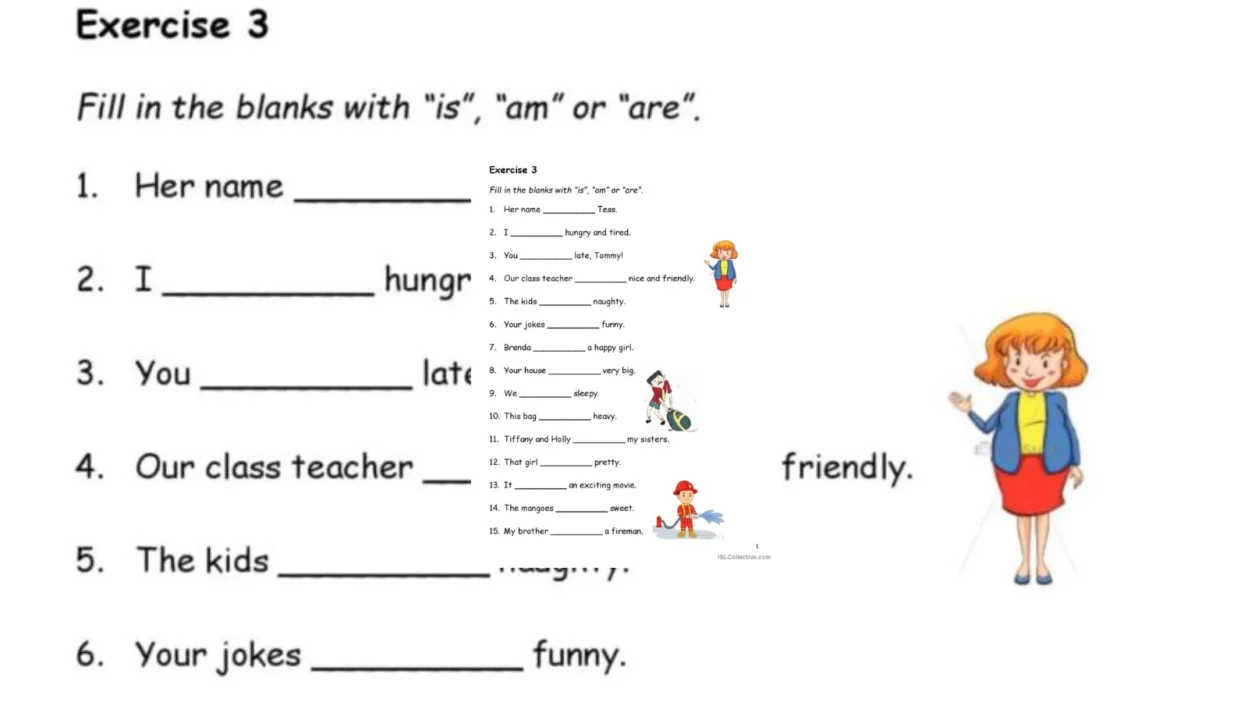
2. Fill in the Blanks (Easy)
Fill in the correct word.
- She ___ a teacher. (is / are)
- I ___ coffee every morning. (drink / drinks)
Answers:
- is
- drink
3. Simple Present Tense Exercise
Use the correct form of the verb.
- He ___ (play) cricket.
- They ___ (live) in Lahore.
Correct Answers:
- He plays cricket.
- They live in Lahore.
English Exercises for Intermediate Learners
If you know basic English, these exercises will help you improve accuracy and fluency.
1. Past Tense Practice
Change the sentence into past tense.
- I eat rice.
- She goes to work early.
Answers:
- I ate rice.
- She went to work early.
2. Preposition Exercise
Choose the correct preposition.
- The meeting is ___ Monday. (on / in)
- He lives ___ Karachi. (in / at)
Answers:
- on
- in
3. Sentence Correction Exercise
Correct the mistake.
❌ She don’t like tea.
✔ She doesn’t like tea.
❌ I am agree with you.
✔ I agree with you.
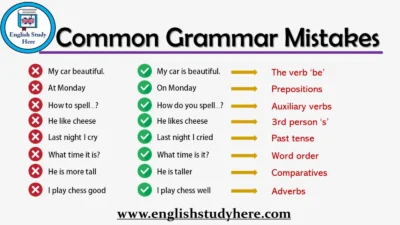
Common Mistakes Learners Make in English
Learning from mistakes is very important.
Mistake 1: Wrong Verb Form
❌ He go to school daily.
✔ He goes to school daily.
Mistake 2: Article Confusion
❌ She is teacher.
✔ She is a teacher.
Mistake 3: Direct Translation from Native Language
❌ I am having a pen.
✔ I have a pen.
Real-Life English Practice Examples
English exercises work best when they match real situations.
At a Shop
- How much is this?
- I want to buy this shirt.
- Do you have a smaller size?
At Work or School
- Please explain this again.
- I don’t understand this topic.
- Can you help me with this task?
Short Daily English Exercise Plan (15 Minutes)
You don’t need hours to improve English.
Daily Plan:
- 5 minutes – Vocabulary exercise
- 5 minutes – Grammar exercise
- 5 minutes – Sentence writing
Consistency is more important than time.
Example Block (Featured Snippet Friendly)
Question: What are English exercises?
Answer:
English exercises are practice activities that help learners improve grammar, vocabulary, and sentence structure. They include fill-in-the-blanks, sentence correction, and real-life examples.
How to Practice English Exercises Effectively
Follow these tips:
- Practice daily, even if it’s short
- Read examples aloud
- Write your own sentences
- Review mistakes weekly
- Use simple English first
FAQ – English Exercises (People Also Ask)
What are the best English exercises for beginners?
The best English exercises for beginners include fill-in-the-blanks, simple sentence writing, basic grammar practice, and vocabulary exercises with examples.
How often should I practice English exercises?
You should practice English exercises daily. Even 15 minutes a day is enough to improve gradually.
Can English exercises improve speaking?
Yes. When you read exercises aloud and make your own sentences, English exercises help improve speaking confidence.
Are English exercises useful for adults?
Yes. English exercises are helpful for learners of all ages, including adults who want to improve grammar and communication.
How long does it take to see improvement?
With regular English exercises, most learners see improvement in 4–6 weeks.
Key Takeaways
- English exercises are essential for learning English
- Start simple and increase difficulty slowly
- Practice grammar, vocabulary, and sentences together
- Learn from mistakes and real-life examples
- Daily practice brings real results
Final Words
English learning is a journey, not a race. With the right English exercises, patience, and daily practice, anyone can improve their English skills.