
Sorry Generator
Introduction: Why English for Jobs Matters Today
English for jobs is one of the most important skills in today’s global job market. Whether you are applying for your first job, changing careers, or working with international clients, basic job-related English can open many doors.
You do not need perfect English. You only need clear, practical English that helps you:
- Apply for jobs
- Pass interviews
- Communicate at work
- Write emails and messages
- Speak confidently with colleagues
This guide is written in simple, clear English for beginner to intermediate learners. You will learn real-life job English, useful phrases, examples, practice sentences, and common mistakes to avoid.
What Is “English for Jobs”?
English for jobs means the English language used in:
- Job applications
- Interviews
- Office communication
- Professional emails
- Meetings and daily work conversations
It focuses on practical communication, not difficult grammar or advanced vocabulary.
Examples of English for Jobs
- “I am applying for the position of sales assistant.”
- “I have three years of experience in customer service.”
- “Please let me know if you need any more information.”
Who Should Learn English for Jobs?
English for jobs is useful if you are:
- A student preparing for your first job
- A fresh graduate
- A job seeker
- A freelancer or remote worker
- A worker dealing with international clients
Even basic English can help you stand out if you use it correctly.
Essential Job-Related English Vocabulary
Below is a table of common English words used in jobs and workplaces.
| Word | Meaning | Example |
| Resume / CV | Job document | “Please send your resume.” |
| Interview | Job meeting | “I have an interview tomorrow.” |
| Experience | Past work | “I have two years of experience.” |
| Skills | What you can do | “My skills include communication.” |
| Salary | Monthly pay | “What is the salary for this job?” |
| Deadline | Last date | “The deadline is Friday.” |
| Manager | Team leader | “My manager approved the task.” |
| Employee | Worker | “She is a full-time employee.” |
English for Job Applications
Writing a Simple Job Application Sentence
You do not need long or complex sentences. Keep it clear.
Examples:
- “I am interested in the marketing assistant position.”
- “I am applying for the job advertised on your website.”
- “I believe my skills are suitable for this role.”
Common Mistakes in Job Applications
❌ “I want this job because I need money.”
✅ “I am interested in this position and eager to learn.”
❌ “I very good in English.”
✅ “I have good English communication skills.”
English for Job Interviews (Most Important Part)
Common Interview Questions in English
1. Tell me about yourself
Simple answer example:
“My name is Ali. I have a degree in business and one year of experience in sales. I am hardworking and eager to learn.”
2. Why do you want this job?
“I want this job because it matches my skills and interests.”
3. What are your strengths?
“My strengths are communication, teamwork, and time management.”
4. What are your weaknesses?
“I am working on improving my confidence when speaking in meetings.”
Useful English Phrases for the Workplace
Daily Office English
- “Good morning. How are you?”
- “I will start working on this task.”
- “Can you please help me?”
- “I will finish it by today.”
Professional Polite English
- “Could you please explain this?”
- “Thank you for your time.”
- “I appreciate your support.”
- “Please let me know if you have any questions.”
English for Work Emails (Simple and Professional)
Example: Simple Work Email
Subject: Meeting Update
Hello Sir,
I hope you are doing well.
I wanted to inform you that the meeting has been rescheduled to Monday.
Thank you.
Kind regards,
Ahmed
Common Email Mistakes
❌ “Send me details fast.”
✅ “Could you please send me the details?”
English for Jobs: Speaking Confidently at Work
You do not need long sentences. Short and clear sentences are better.
Practice Speaking Sentences
- “I am working on the report.”
- “I will update you soon.”
- “I have completed the task.”
- “There is a small issue with the project.”
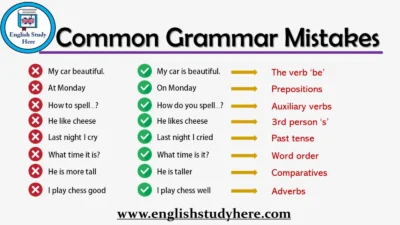
Common Grammar Mistakes in Job English
1. Wrong Tense
❌ “I work here since two years.”
✅ “I have worked here for two years.”
2. Missing Articles (a / an / the)
❌ “I am manager.”
✅ “I am a manager.”
3. Informal Language
❌ “Hey bro, what’s up?”
✅ “Hello, how are you?”
Practice Section: Improve Your English for Jobs
Fill in the Blanks
- I am applying ___ the position of assistant.
- I have three years of work ___.
- Please let me know if you need more ___.
Answers:
- for
- experience
- information
Real-Life Example: English for Jobs in Action
Situation: First day at work
“Good morning. My name is Sara. I am new here. Please let me know if you need any help.”
Simple. Polite. Professional. That is good job English.
English for Jobs and Career Growth
Better English helps you:
- Get better job opportunities
- Work with international teams
- Earn higher salaries
- Grow your confidence
Even small improvements matter.
FAQ: English for Jobs (People Also Ask)
What level of English is needed for jobs?
Basic to intermediate English is enough for most entry-level and office jobs.
Can I get a job with basic English?
Yes. Many jobs require simple communication, not advanced English.
How can I improve English for jobs quickly?
Practice daily phrases, job vocabulary, and simple speaking sentences.
Is grammar more important or speaking?
Clear speaking is more important, but basic grammar helps professionalism.
How long does it take to learn English for jobs?
With daily practice, you can improve in 2–3 months.
Key Takeaways: English for Jobs
- English for jobs focuses on practical communication
- Simple English is better than complex English
- Learn job vocabulary, interview answers, and email phrases
- Avoid common grammar and tone mistakes
- Practice daily with real-life examples
Final Words (Soft CTA)
English for jobs is a skill, not a talent. You can learn it step by step.
Practice speaking, read more job-related English, and explore other grammar topics to improve your confidence and career opportunities.