
Sorry Generator
Introduction: Why English Grammar Daily Use Matters
English grammar daily use is not about memorizing difficult rules or complex books. It is about using correct English in everyday life—while speaking, writing messages, or understanding others.
If you are a beginner or an intermediate learner, this guide will help you:
- Speak English more confidently
- Avoid common grammar mistakes
- Use English naturally in daily conversations
In this article, you will learn simple grammar rules, real-life examples, practice sentences, and frequent errors that learners make. Everything is explained in clear, easy English.
What Is English Grammar Daily Use?
English grammar daily use means the grammar we use in:
- Daily conversations
- Office or school communication
- Social media, chats, and emails
- Asking questions and giving answers
It focuses on practical grammar, not bookish language.
Basic Sentence Structure (Daily Use Grammar)
English Sentence Formula
Most English sentences follow this pattern:
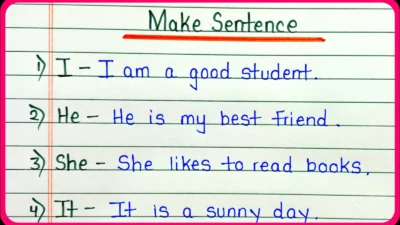
Subject + Verb + Object
Examples:
- I eat rice.
- She reads books.
- They play cricket.
Common Mistake
❌ Eat I rice.
✅ I eat rice.
Daily Use Tenses (Simple Explanation)
1. Simple Present Tense (Daily Habits)
Used for:
- Daily routines
- Facts
- Habits
Structure:
Subject + base verb (+ s/es)
Examples:
- I wake up early.
- She works in an office.
- We speak English daily.
Common Mistake
❌ She work in an office.
✅ She works in an office.
2. Simple Past Tense (Finished Actions)
Used for actions completed in the past.
Structure:
Subject + past verb
Examples:
- I visited my friend yesterday.
- He watched a movie.
- They finished their work.
Common Mistake
❌ I visit my friend yesterday.
✅ I visited my friend yesterday.
3. Simple Future Tense (Plans & Decisions)
Used for future plans and promises.
Structure:
Subject + will + base verb
Examples:
- I will call you later.
- She will help you.
- We will start tomorrow.
Daily Use of “Is, Am, Are”
Usage Table
| Subject | Verb |
| I | am |
| He / She / It | is |
| You / We / They | are |
Examples:
- I am ready.
- She is tired.
- They are happy.
Common Mistake
❌ I is happy.
✅ I am happy.
Use of Articles (A, An, The) in Daily Life
A / An
Used for non-specific things.
- A → before consonant sound
- An → before vowel sound
Examples:
- a book
- an apple
- an honest man
The
Used for specific things.
Examples:
- The sun is bright.
- The teacher is here.
Common Mistake
❌ She is teacher.
✅ She is a teacher.
Daily Use Prepositions (Easy Guide)
Common Prepositions
| Preposition | Usage | Example |
| in | inside / time | in the room |
| on | surface / day | on the table |
| at | exact place/time | at home |
Examples:
- I live in Lahore.
- The book is on the table.
- She is at school.
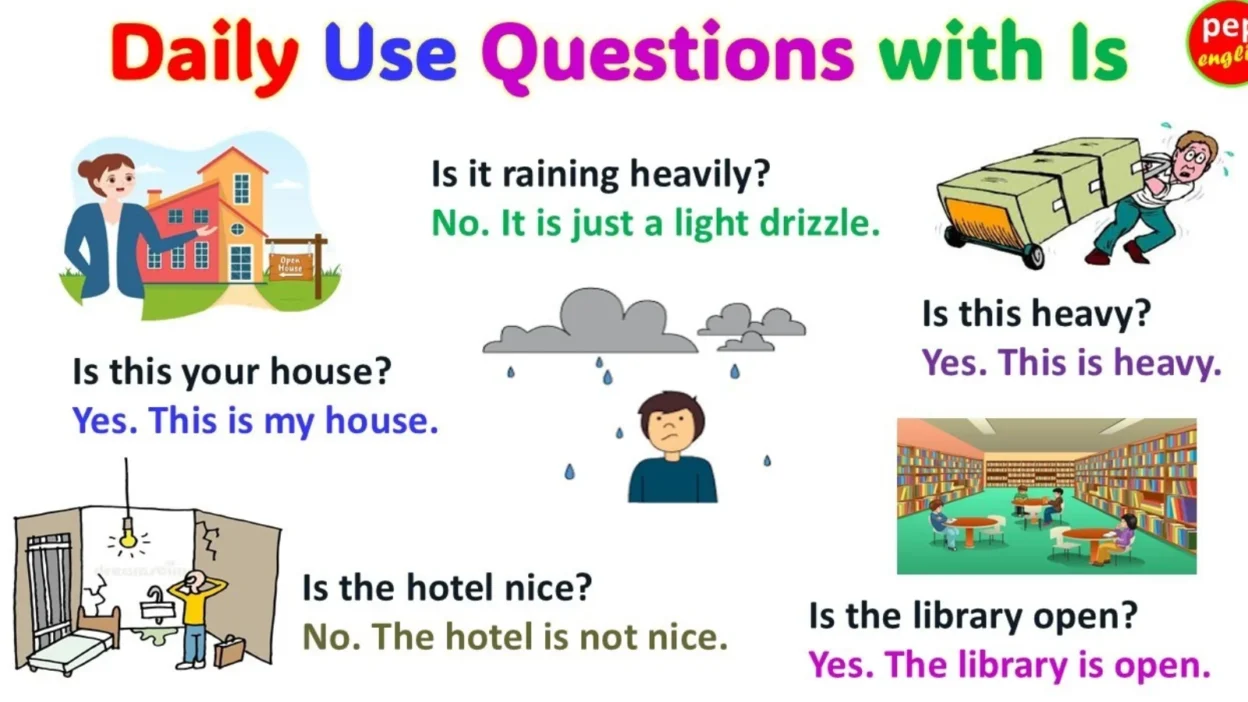
Daily Use Questions in English
Yes/No Questions
Use helping verbs.
Structure:
Helping verb + subject + verb?
Examples:
- Do you like tea?
- Is she coming?
- Are they ready?
Wh- Questions
Who, What, Where, When, Why, How
Examples:
- Where are you going?
- What is your name?
- Why are you late?
Common Daily Use Modal Verbs
Can / Could
Used for ability and permission.
- I can speak English.
- Could you help me?
Should
Used for advice.
- You should study daily.
- He should sleep early.
Must
Used for necessity.
- You must wear a helmet.
Daily Use of Active and Passive Voice
Active Voice
Subject does the action.
- She cleans the room.
Passive Voice
Action is more important.
- The room is cleaned.
Daily Use Tip:
Active voice is more common in daily English.
Common English Grammar Mistakes in Daily Use
Mistake 1: Wrong Verb Form
❌ He go to office daily.
✅ He goes to office daily.
Mistake 2: Missing Articles
❌ I have pen.
✅ I have a pen.
Mistake 3: Wrong Preposition
❌ She is good in English.
✅ She is good at English.
Daily Use English Grammar Practice
Practice Sentences
- She go to school daily.
- I am agree with you.
- He did not went there.
Answers:
- She goes to school daily.
- I agree with you.
- He did not go there.
Featured Snippet: Daily Use Grammar Examples
Sentence Examples:
- I am learning English grammar daily use.
- She speaks English very well.
- We practice grammar every day.
FAQ: English Grammar Daily Use (People Also Ask)
What is English grammar daily use?
It is the grammar used in everyday speaking, writing, and communication.
How can I improve daily use English grammar?
Practice simple sentences, speak daily, and focus on common mistakes.
Is grammar important for speaking English?
Yes, basic grammar helps you speak clearly and correctly.
Which tense is most used in daily English?
Simple present tense is most common in daily conversations.
Can I learn English grammar without rules?
You still need basic rules, but learning through examples is best.
Quick Summary: Key Takeaways
- English grammar daily use focuses on simple and practical rules
- Learn basic tenses, sentence structure, and common words
- Avoid frequent mistakes with verbs, articles, and prepositions
- Practice daily with real-life examples
Final Words (Soft CTA)
Learning English grammar daily use becomes easy when you practice a little every day. Start using short sentences, speak confidently, and don’t fear mistakes.
👉 Practice daily
👉 Explore more grammar topics
👉 Use English in real life
Consistency is the real secret to fluency.
English Grammar Daily Use: Simple Rules, Real-Life Examples, and Easy Practice
URL Slug: english-grammar-daily-use
Meta Description
Learn English grammar daily use with simple rules, real-life examples, common mistakes, and easy practice for beginners and intermediate learners.
Introduction: Why English Grammar Daily Use Matters
English grammar daily use is not about memorizing difficult rules or complex books. It is about using correct English in everyday life—while speaking, writing messages, or understanding others.
If you are a beginner or an intermediate learner, this guide will help you:
- Speak English more confidently
- Avoid common grammar mistakes
- Use English naturally in daily conversations
In this article, you will learn simple grammar rules, real-life examples, practice sentences, and frequent errors that learners make. Everything is explained in clear, easy English.
What Is English Grammar Daily Use?
English grammar daily use means the grammar we use in:
- Daily conversations
- Office or school communication
- Social media, chats, and emails
- Asking questions and giving answers
It focuses on practical grammar, not bookish language.
Basic Sentence Structure (Daily Use Grammar)
English Sentence Formula
Most English sentences follow this pattern:
Subject + Verb + Object
Examples:
- I eat rice.
- She reads books.
- They play cricket.
Common Mistake
❌ Eat I rice.
✅ I eat rice.
Daily Use Tenses (Simple Explanation)
1. Simple Present Tense (Daily Habits)
Used for:
- Daily routines
- Facts
- Habits
Structure:
Subject + base verb (+ s/es)
Examples:
- I wake up early.
- She works in an office.
- We speak English daily.
Common Mistake
❌ She work in an office.
✅ She works in an office.
2. Simple Past Tense (Finished Actions)
Used for actions completed in the past.
Structure:
Subject + past verb
Examples:
- I visited my friend yesterday.
- He watched a movie.
- They finished their work.
Common Mistake
❌ I visit my friend yesterday.
✅ I visited my friend yesterday.
3. Simple Future Tense (Plans & Decisions)
Used for future plans and promises.
Structure:
Subject + will + base verb
Examples:
- I will call you later.
- She will help you.
- We will start tomorrow.
Daily Use of “Is, Am, Are”
Usage Table
| Subject | Verb |
| I | am |
| He / She / It | is |
| You / We / They | are |
Examples:
- I am ready.
- She is tired.
- They are happy.
Common Mistake
❌ I is happy.
✅ I am happy.
Use of Articles (A, An, The) in Daily Life
A / An
Used for non-specific things.
- A → before consonant sound
- An → before vowel sound
Examples:
- a book
- an apple
- an honest man
The
Used for specific things.
Examples:
- The sun is bright.
- The teacher is here.
Common Mistake
❌ She is teacher.
✅ She is a teacher.
Daily Use Prepositions (Easy Guide)
Common Prepositions
| Preposition | Usage | Example |
| in | inside / time | in the room |
| on | surface / day | on the table |
| at | exact place/time | at home |
Examples:
- I live in Lahore.
- The book is on the table.
- She is at school.
Daily Use Questions in English
Yes/No Questions
Use helping verbs.
Structure:
Helping verb + subject + verb?
Examples:
- Do you like tea?
- Is she coming?
- Are they ready?
Wh- Questions
Who, What, Where, When, Why, How
Examples:
- Where are you going?
- What is your name?
- Why are you late?
Common Daily Use Modal Verbs
Can / Could
Used for ability and permission.
- I can speak English.
- Could you help me?
Should
Used for advice.
- You should study daily.
- He should sleep early.
Must
Used for necessity.
- You must wear a helmet.
Daily Use of Active and Passive Voice
Active Voice
Subject does the action.
- She cleans the room.
Passive Voice
Action is more important.
- The room is cleaned.
Daily Use Tip:
Active voice is more common in daily English.
Common English Grammar Mistakes in Daily Use
Mistake 1: Wrong Verb Form
❌ He go to office daily.
✅ He goes to office daily.
Mistake 2: Missing Articles
❌ I have pen.
✅ I have a pen.
Mistake 3: Wrong Preposition
❌ She is good in English.
✅ She is good at English.
Daily Use English Grammar Practice
Practice Sentences
- She go to school daily.
- I am agree with you.
- He did not went there.
Answers:
- She goes to school daily.
- I agree with you.
- He did not go there.
Featured Snippet: Daily Use Grammar Examples
Sentence Examples:
- I am learning English grammar daily use.
- She speaks English very well.
- We practice grammar every day.
FAQ: English Grammar Daily Use (People Also Ask)
What is English grammar daily use?
It is the grammar used in everyday speaking, writing, and communication.
How can I improve daily use English grammar?
Practice simple sentences, speak daily, and focus on common mistakes.
Is grammar important for speaking English?
Yes, basic grammar helps you speak clearly and correctly.
Which tense is most used in daily English?
Simple present tense is most common in daily conversations.
Can I learn English grammar without rules?
You still need basic rules, but learning through examples is best.
Quick Summary: Key Takeaways
- English grammar daily use focuses on simple and practical rules
- Learn basic tenses, sentence structure, and common words
- Avoid frequent mistakes with verbs, articles, and prepositions
- Practice daily with real-life examples
Final Words (Soft CTA)
Learning English grammar daily use becomes easy when you practice a little every day. Start using short sentences, speak confidently, and don’t fear mistakes.