
Sorry Generator
Introduction: Why English Grammar for Daily Speaking Matters
English grammar for daily speaking is not about difficult rules or long definitions. It is about using simple, correct sentences in real-life situations like talking to friends, family, colleagues, or shopkeepers.
Many learners know English words but still feel shy or confused while speaking. The main reason is weak grammar basics. When your grammar is clear, your speaking becomes:
- More confident
- More natural
- Easier to understand
This guide is designed for beginner to intermediate learners. You will learn practical grammar rules that you can use every day, not just in exams.
What Is English Grammar for Daily Speaking?
English grammar for daily speaking focuses on useful structures that people actually use in conversations. It avoids complex rules and concentrates on:
- Short sentences
- Common tenses
- Everyday vocabulary
- Natural speaking patterns
Daily Speaking vs Academic Grammar
| Daily Speaking Grammar | Academic Grammar |
| Simple and short sentences | Long and complex sentences |
| Used in conversations | Used in writing and exams |
| Focus on clarity | Focus on accuracy and style |
Basic Sentence Structure for Daily Speaking (H2)
To speak English fluently, you must first understand basic sentence structure.
Simple Sentence Formula (Featured Snippet Friendly)
Subject + Verb + Object
Examples:
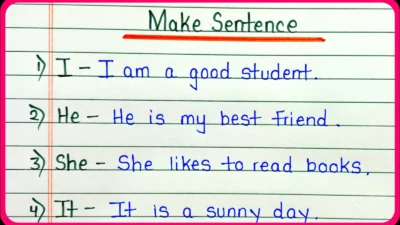
- I eat breakfast.
- She likes coffee.
- They play cricket.
Practice Sentences
- I work in an office.
- He watches TV at night.
- We speak English daily.
Common Mistakes
❌ I breakfast eat.
✅ I eat breakfast.
Present Simple Tense for Daily Conversations (H2)
The present simple tense is the most important tense for daily speaking.
When to Use Present Simple
- Daily routines
- Habits
- General facts
Structure
Subject + base verb (+ s/es for he/she/it)
Real-Life Examples
- I wake up early.
- She works in a hospital.
- He speaks English well.
Common Mistakes
❌ She work hard.
✅ She works hard.
Present Continuous Tense in Daily Life (H2)
Use the present continuous tense to talk about actions happening now.
Structure
Subject + am/is/are + verb + ing
Examples from Daily Life
- I am eating lunch.
- She is talking on the phone.
- They are watching a movie.
Common Mistakes
❌ I am eat lunch.
✅ I am eating lunch.
Past Simple Tense for Daily Speaking (H2)
We often talk about the past in daily conversations.
When to Use
- Finished actions
- Yesterday, last night, last week
Structure
Subject + past verb
Examples
- I visited my friend.
- She cooked dinner.
- We watched a match.
Common Mistakes
❌ I visit my friend yesterday.
✅ I visited my friend yesterday.
Future Talking: Will vs Going To (H2)
Talking about the future is common in daily speaking.
Use “Will” When:
- Making instant decisions
- Promises
Examples:
- I will help you.
- She will call you later.
Use “Going To” When:
- Plans
- Intentions
Examples:
- I am going to start a job.
- They are going to travel tomorrow.
Everyday Questions in English Grammar (H2)
Asking questions correctly is essential for daily speaking.
Yes/No Questions
Do/Does + subject + verb?
Examples:
- Do you like tea?
- Does she work here?
WH-Questions
- What do you do?
- Where are you going?
- Why are you late?
Common Mistakes
❌ Where you are going?
✅ Where are you going?
Using Articles (a, an, the) in Daily Speaking (H2)
Articles are small but very important.
A / An
- Used with singular nouns
- “A” before consonant sounds
- “An” before vowel sounds
Examples:
- a book
- an apple
The
- Used for specific things
Example:
- The sun is bright today.
Common Mistakes
❌ I have pen.
✅ I have a pen.
Prepositions for Daily English Speaking (H2)
Prepositions show time, place, and direction.
Common Prepositions
| Preposition | Example |
| In | in the room |
| On | on the table |
| At | at home |
| To | go to school |
Common Mistakes
❌ I am in home.
✅ I am at home.
Polite English Grammar for Daily Speaking (H2)
Politeness is very important in daily English.
Polite Sentences
- Can you help me?
- Could you please explain?
- May I come in?
Informal vs Polite
| Informal | Polite |
| Give me water | Can you give me water? |
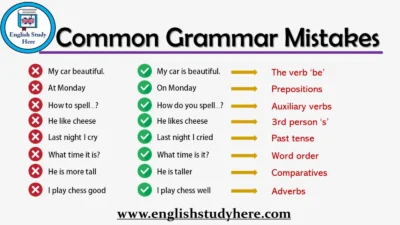
Common Grammar Mistakes in Daily Speaking (H2)
Here are mistakes learners often make:
- Wrong tense usage
- Missing articles
- Incorrect word order
- Overusing complex grammar
Example Correction
❌ I am agree with you.
✅ I agree with you.
Practice Sentences for Daily Speaking (H2)
Try speaking these sentences aloud:
- I am learning English every day.
- She goes to work by bus.
- We are having dinner now.
- He will call you soon.
- They visited us last week.
English Grammar for Daily Speaking: Quick Tips (H2)
- Speak slowly and clearly
- Focus on simple grammar
- Practice daily conversations
- Do not fear mistakes
Frequently Asked Questions (FAQ – Schema Ready)
What is English grammar for daily speaking?
English grammar for daily speaking means using simple and correct grammar in everyday conversations.
Which tense is most important for daily speaking?
The present simple tense is the most important for daily communication.
How can I improve grammar for daily speaking?
Practice speaking daily, learn basic rules, and use real-life sentences.
Is grammar necessary for speaking English?
Yes, basic grammar helps you speak clearly and confidently.
Can I speak English without perfect grammar?
Yes, but correct basic grammar improves understanding and confidence.
Key Takeaways: English Grammar for Daily Speaking
- Focus on simple grammar rules
- Learn present, past, and future tenses
- Practice real-life sentences
- Avoid common mistakes
- Speak daily for improvement
Final Words (Soft CTA)
English grammar for daily speaking improves step by step. Start with simple sentences, practice every day, and don’t be afraid of mistakes.