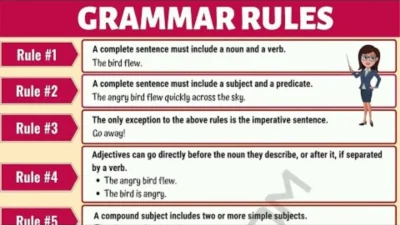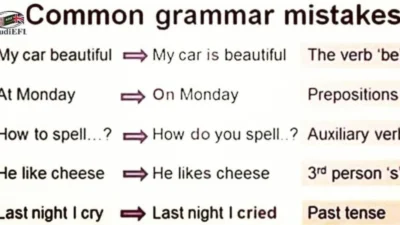
English grammar can feel confusing, slow, and full of rules. Many learners think they must memorize everything. The good news is: you don’t have to.
With the right English grammar shortcuts, you can understand grammar faster, speak more confidently, and avoid common mistakes. These shortcuts are simple patterns, tips, and quick rules that native speakers use naturally—often without realizing it.
This guide is written in clear, simple English for beginners and intermediate learners. You’ll find:
- Easy explanations
- Real-life examples
- Practice sentences
- Common mistakes to avoid
Let’s make grammar easier, not harder.
Sorry Generator
What Are English Grammar Shortcuts?
English grammar shortcuts are quick and practical rules that help you:
- Understand grammar without long explanations
- Choose the correct tense or structure faster
- Speak and write more naturally
They are not “wrong grammar.” They are smart learning techniques.
Why Grammar Shortcuts Work
- English follows patterns
- Most daily conversations use basic structures
- You don’t need 100% grammar to communicate clearly
English Grammar Shortcuts for Tenses
Tenses are one of the biggest problems for learners. Use these shortcuts.
Present Simple Shortcut
Shortcut rule:
👉 If it is always true, regular, or routine, use Present Simple.
Structure:
Subject + base verb (add s/es with he/she/it)
Examples:
- I wake up at 7 a.m.
- She works in an office.
- Water boils at 100°C.
Common Mistake ❌
She work in an office.
Correct ✅
She works in an office.
Present Continuous Shortcut
Shortcut rule:
👉 If it is happening now or temporary, use Present Continuous.
Structure:
am / is / are + verb + ing
Examples:
- I am reading now.
- They are living in Lahore these days.
Common Mistake ❌
I read now.
Correct ✅
I am reading now.
Past Simple Shortcut
Shortcut rule:
👉 If the action is finished and the time is known, use Past Simple.
Keywords: yesterday, last night, ago, in 2023
Examples:
- I met him yesterday.
- She finished her homework last night.
Common Mistake ❌
I have met him yesterday.
Correct ✅
I met him yesterday.
Future Shortcut (Will vs Going To)
| Situation | Use |
| Instant decision | will |
| Plan already made | going to |
| Prediction (opinion) | will |
| Strong evidence | going to |
Examples:
- I’m tired. I will sleep now.
- I am going to visit my friend tomorrow.
Shortcut for Articles (a, an, the)
Articles confuse many learners. Use this simple rule.
A / An Shortcut
👉 Use a / an when:
- The thing is not specific
- It is mentioned for the first time
Examples:
- I saw a dog.
- She wants an apple.
Sound rule:
- a = consonant sound (a university)
- an = vowel sound (an hour)
The Shortcut
👉 Use the when:
- Both people know the thing
- It is specific or unique
Examples:
- The sun is hot.
- Close the door, please.
Shortcut for Prepositions (In, On, At)
Prepositions look small but cause big mistakes.
Time Preposition Shortcut
| Use | Preposition | Example |
| Months / years | in | in June, in 2026 |
| Days / dates | on | on Monday |
| Exact time | at | at 5 p.m. |
Common Mistake ❌
I will come in Monday.
Correct ✅
I will come on Monday.
Place Shortcut
- in = inside something (in a room, in Pakistan)
- on = surface (on the table)
- at = exact point (at the door, at home)
Shortcut for Sentence Structure
Basic English Sentence Formula
👉 Subject + Verb + Object
Examples:
- I like tea.
- She reads books.
If your sentence follows this order, it is usually correct.
Question Shortcut
👉 Move the helping verb to the front.
Examples:
- You are happy. → Are you happy?
- She can drive. → Can she drive?
Negative Sentence Shortcut
👉 Add not after the helping verb.
Examples:
- I do not understand.
- He is not coming.
Shortcut for Active vs Passive Voice
Passive Voice Shortcut
👉 If the action is more important than the doer, use passive.
Structure:
Object + be + past participle
Examples:
- The letter was sent.
- The work is completed.
Active:
Someone sent the letter.
Shortcut for Conditionals (If Sentences)
First Conditional Shortcut
👉 Real and possible situation
Structure:
If + present, will + verb
Example:
- If it rains, I will stay home.
Second Conditional Shortcut
👉 Unreal or imaginary situation
Structure:
If + past, would + verb
Example:
- If I were rich, I would travel.
Common Mistake ❌
If I was rich…
Correct (formal) ✅
If I were rich…
Common Grammar Shortcut Mistakes to Avoid
- Using present tense for past time
- Forgetting s/es with he/she/it
- Mixing “has” and “have”
- Overusing long, complex sentences
👉 Simple English is good English.
Practice Sentences (Try Yourself)
Fill in the blanks:
- She ___ (work) every day.
- I am ___ (go) to call you later.
- We met ___ Monday.
- The food ___ (cook) already.
Answers:
- works
- going
- on
- is cooked / has been cooked (context-based)
English Grammar Shortcuts for Speaking Confidence
- Focus on meaning, not perfection
- Use short sentences
- Learn patterns, not rules
- Practice daily with real examples
Native speakers don’t think about grammar rules—they use shortcuts.
Frequently Asked Questions (FAQ)
What are English grammar shortcuts?
English grammar shortcuts are simple rules and patterns that help learners understand and use grammar faster without memorizing complex rules.
Are grammar shortcuts correct English?
Yes. They are based on real usage and common patterns in spoken and written English.
Can beginners use grammar shortcuts?
Absolutely. Grammar shortcuts are especially helpful for beginners and intermediate learners.
Do grammar shortcuts work for exams?
Yes. They help you avoid common mistakes and improve accuracy in writing and speaking tests.
How can I practice English grammar shortcuts?
Use daily sentences, short conversations, and simple writing exercises. Practice is key.
Key Takeaways
- English grammar is pattern-based
- Shortcuts save time and reduce confusion
- Simple rules improve speaking and writing
- Practice makes shortcuts automatic
You don’t need perfect grammar—you need clear grammar.
Final Thought (Soft CTA)
Start using these English grammar shortcuts today. Practice with real-life sentences, explore more grammar topics, and make English a natural part of your daily life.