

Sorry Generator
Introduction: What Are English Idioms?
English idioms are common phrases that have a meaning different from the individual words used in them. If you translate idioms word by word, they often do not make sense.
For example:
👉 “It’s raining cats and dogs”
This does not mean animals are falling from the sky. It means it’s raining very heavily.
English idioms are used every day in:
- Conversations
- Movies and TV shows
- News and social media
- Spoken English exams
If you want to sound natural and confident in English, learning idioms is very important.
In this beginner-friendly guide, you will learn:
- The meaning of common English idioms
- Real-life examples
- Practice sentences
- Common mistakes learners make
Why Should You Learn English Idioms?
Learning English idioms helps you:
- Understand native speakers better
- Speak more naturally and fluently
- Improve listening and reading skills
- Score better in spoken English tests
Idioms are especially useful for daily conversation, spoken English, and informal writing.
How to Learn English Idioms Easily (Beginner Tips)
Before learning idioms, remember these tips:
- Learn idioms in context, not as single phrases
- Do not use too many idioms in one sentence
- Practice idioms in simple sentences
- Focus on common idioms, not rare ones
Common English Idioms with Meanings and Examples
Below are easy and commonly used English idioms for beginner to intermediate learners.
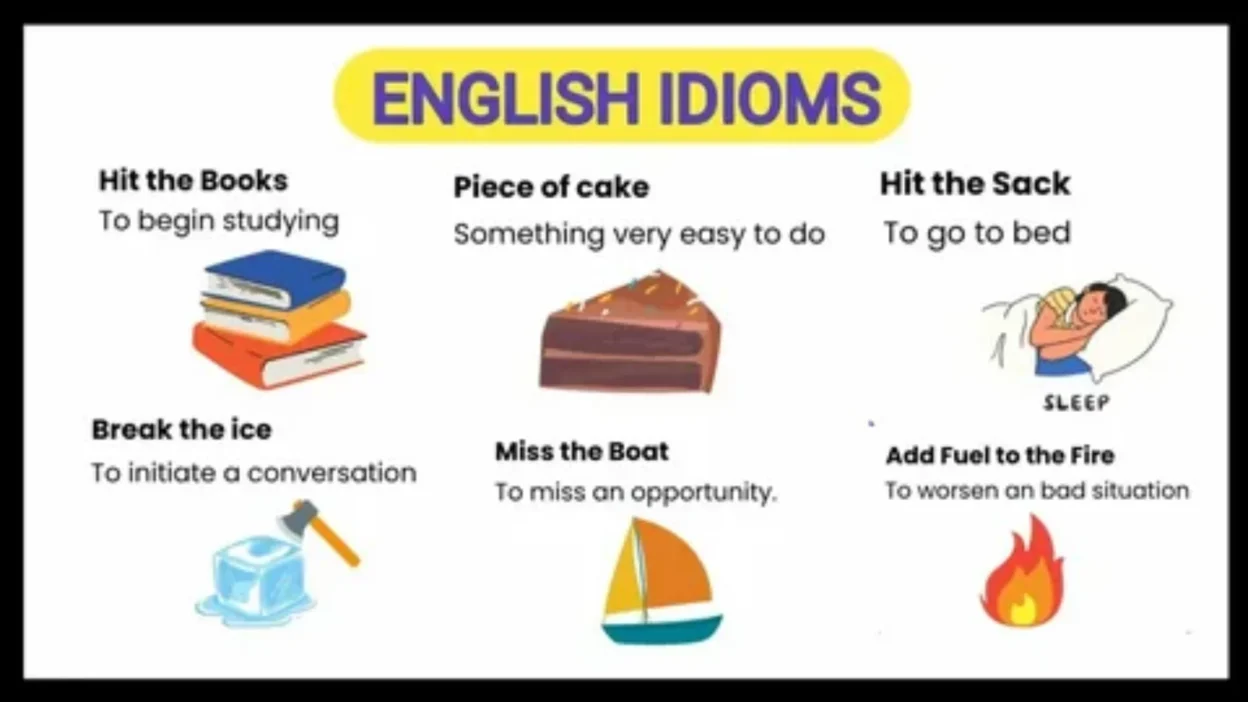
1. Break the Ice
Meaning:
To start a conversation in a friendly way.
Example:
- The teacher told a joke to break the ice.
Real-life use:
Used in meetings, classes, or when meeting new people.
Practice sentence:
- I smiled to break the ice with my new neighbor.
Common mistake:
❌ Breaking actual ice
✅ Starting a friendly conversation
2. Piece of Cake
Meaning:
Something very easy to do.
Example:
- The English test was a piece of cake.
Practice sentence:
- Cooking this dish is a piece of cake.
3. Under the Weather
Meaning:
Feeling sick or unwell.
Example:
- I’m feeling under the weather today.
Practice sentence:
- She didn’t come to work because she was under the weather.
4. Hit the Books
Meaning:
To study seriously.
Example:
- I need to hit the books before exams.
Practice sentence:
- He hit the books all night.
5. Once in a Blue Moon
Meaning:
Something that happens very rarely.
Example:
- I eat fast food once in a blue moon.
Practice sentence:
- We visit our village once in a blue moon.
6. Spill the Beans
Meaning:
To reveal a secret.
Example:
- Don’t spill the beans about the surprise.
Practice sentence:
- He spilled the beans by mistake.
7. Cost an Arm and a Leg
Meaning:
Very expensive.
Example:
- This phone costs an arm and a leg.
Practice sentence:
- That hotel costs an arm and a leg.
8. On Cloud Nine
Meaning:
Very happy.
Example:
- She was on cloud nine after passing the exam.
Practice sentence:
- I’m on cloud nine today.
9. At the Drop of a Hat
Meaning:
Immediately, without delay.
Example:
- He can leave at the drop of a hat.
Practice sentence:
- She helps others at the drop of a hat.
10. A Blessing in Disguise
Meaning:
Something bad that turns out to be good.
Example:
- Losing that job was a blessing in disguise.
Practice sentence:
- The delay was a blessing in disguise.
Table: Quick Idiom Review
| Idiom | Meaning | Example |
| Break the ice | Start conversation | He told a joke |
| Piece of cake | Very easy | Easy homework |
| Under the weather | Feeling sick | Not feeling well |
| Hit the books | Study hard | Exam preparation |
| Once in a blue moon | Rarely | Very rare event |
How to Use English Idioms in Sentences
When using idioms:
- Use them in informal situations
- Avoid using them in very formal writing
- Make sure the context is correct
Correct:
- This task is a piece of cake.
Incorrect:
- The cake is a piece of cake to eat. ❌
Common Mistakes English Learners Make with Idioms
1. Using Idioms Literally
Idioms are not literal.
❌ It’s raining animals
✅ It’s raining cats and dogs
2. Using Too Many Idioms
One idiom per sentence is enough.
3. Using Idioms in Formal Writing
Idioms are best for spoken and casual English.
Practice Section: Try It Yourself
Fill in the blanks:
- I’m feeling __________ today, so I won’t go out.
- The exam was a __________.
- Don’t __________ about the surprise.
Answers:
- under the weather
- piece of cake
- spill the beans
English Idioms in Daily Conversation
Native speakers use idioms naturally:
- At work: Let’s break the ice
- With friends: I’m on cloud nine
- While studying: Time to hit the books
Listening to movies and YouTube videos helps you learn idioms faster.
FAQ: English Idioms (People Also Ask)
What are English idioms?
English idioms are phrases with meanings different from the literal words used.
Are idioms important for beginners?
Yes, common idioms help beginners understand real English conversations.
How many idioms should I learn?
Start with 5–10 common idioms and practice them daily.
Can idioms be used in exams?
Yes, especially in speaking tests, but use them correctly.
How can I remember idioms easily?
Learn idioms with examples, stories, and daily practice.
Key Takeaways: English Idioms
- English idioms make your English sound natural
- Idioms have non-literal meanings
- Learn idioms with context and examples
- Practice regularly in daily sentences
- Avoid using idioms in very formal writing
Final Thoughts & Soft CTA
Learning English idioms is a powerful step toward fluent English. Start small, practice daily, and listen to real conversations.