Sorry Generator
English Reading: A Simple and Practical Guide
English reading is one of the most important skills for learning English. When you read well, you understand new words, grammar, and ideas faster. English reading also helps you speak, write, and listen better.
Many learners think English reading is difficult. But the truth is simple: reading becomes easy with the right method and regular practice. You do not need difficult books or advanced vocabulary to start.
This guide is written for beginner to intermediate learners. The language is clear, examples are simple, and explanations are practical. You will learn how to improve English reading step by step, avoid common mistakes, and practice confidently.
What Is English Reading?
English reading means understanding written English. It is not only about reading words. It is about:
- Understanding the meaning
- Learning new vocabulary
- Recognizing sentence structure
- Getting the main idea of a text
English reading can include:
- Short stories
- News articles
- Dialogues
- Instructions
- Emails
- Blog posts
Why English Reading Is Important
English reading helps you in many ways:
- Improves vocabulary naturally
- Helps you understand grammar in real use
- Increases confidence in English
- Makes speaking and writing easier
- Helps in exams, jobs, and daily life
Real-life example:
If you read English daily, you will understand emails, messages, and instructions without translation.
Types of English Reading
1. Skimming (Reading Fast)
Skimming means reading quickly to understand the main idea.
Example:
Reading headlines to know what the article is about.
2. Scanning (Reading for Information)
Scanning means looking for specific information.
Example:
Finding a date, name, or number in a text.
3. Intensive Reading (Deep Reading)
Intensive reading means reading carefully to understand every detail.
Example:
Reading a lesson or grammar explanation.
4. Extensive Reading (Reading for Fun)
Extensive reading means reading easy and interesting material.
Example:
Stories, blogs, or simple novels.
English Reading for Beginners
If you are a beginner, start small.
What Beginners Should Read
- Short paragraphs
- Simple stories
- Children’s books
- Basic dialogues
- Picture-based texts
Beginner Example
Text:
Option 1 (Simple and natural):
I wake up early.
Then I drink tea.
At 9 a.m., I go to work.
Option 2 (Smooth version):
I wake up early and drink tea.
After that, I go to work at 9 a.m.
Option 3 (Beginner-friendly):
I wake up early in the morning.
After breakfast, I drink tea.
At 9 a.m., I leave for work.
Meaning:
The sentences are short and clear. This is perfect for beginners.
English Reading for Intermediate Learners
Intermediate learners can read longer and more detailed texts.
What Intermediate Learners Should Read
- News articles (easy level)
- Short essays
- Emails and messages
- Simple novels
- Blog posts
Intermediate Example
Text:
I usually wake up early because my job starts at 9 a.m. After breakfast, I read the news and prepare for work.
How to Improve English Reading Skills
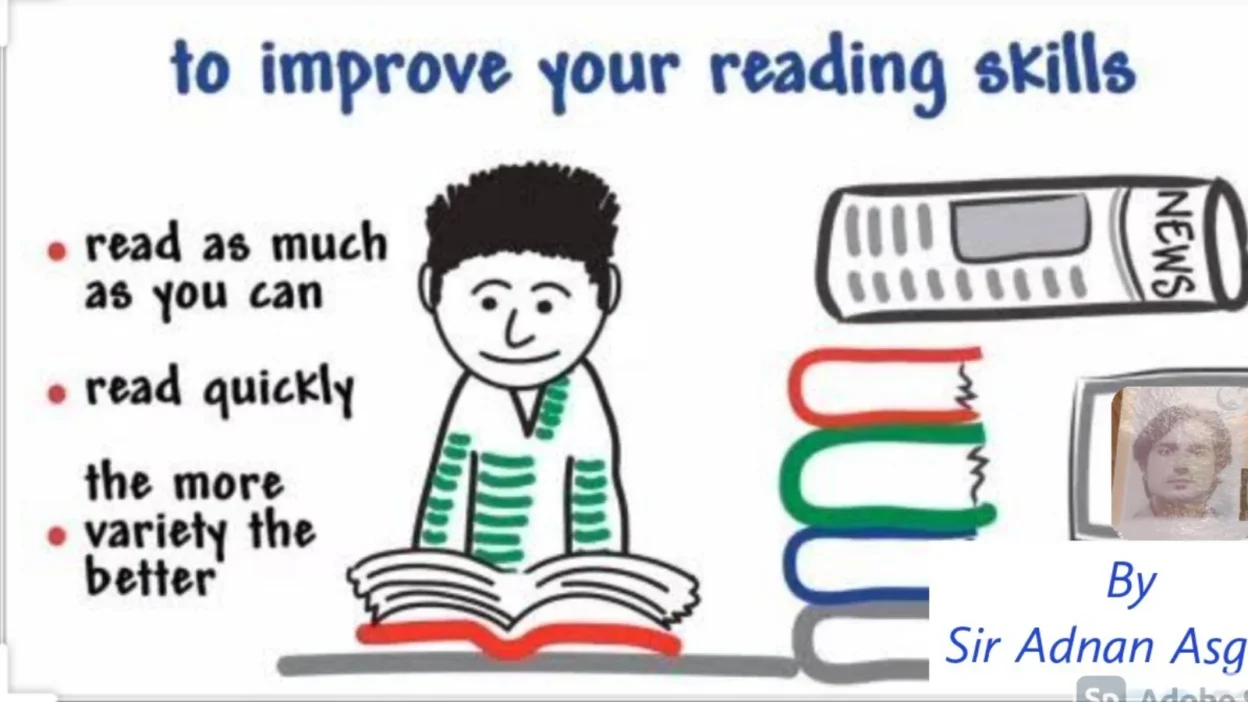
1. Read Every Day
Even 10–15 minutes daily can improve your English reading.
2. Choose Easy Content
Do not read very difficult texts. Easy reading builds confidence.
3. Do Not Translate Every Word
Try to understand the meaning of the sentence, not each word.
4. Read Aloud Sometimes
Reading aloud improves pronunciation and fluency.
5. Use a Dictionary Wisely
Check only important or repeated words.
English Reading Example (Featured Snippet Style)
Short Passage:
My name is Ali. I live in Lahore. I am learning English because it helps me in my job.
Questions:
- Where does Ali live? → Lahore
- Why is he learning English? → For his job
Common Vocabulary Used in English Reading
| Word | Meaning |
| Read | To look at and understand words |
| Learn | To gain knowledge |
| Improve | To make better |
| Meaning | What something shows or explains |
| Example | A sample sentence or situation |
Practice Sentences for English Reading
Read these sentences slowly:
- I like reading English stories.
- She reads books every night.
- English reading helps me learn new words.
- He reads the newspaper in the morning.
- We practice English reading in class.
Common Mistakes in English Reading
Mistake 1: Reading Too Fast
Many learners read fast but do not understand.
Solution:
Read slowly and clearly.
Mistake 2: Translating Word by Word
This makes reading difficult.
Solution:
Understand the sentence meaning.
Mistake 3: Choosing Difficult Texts
Hard texts cause frustration.
Solution:
Start with easy reading.
Mistake 4: Not Practicing Regularly
Irregular practice slows progress.
Solution:
Read a little every day.
English Reading Strategies for Better Understanding
- Read the title first
- Look at headings
- Guess meaning from context
- Read again if needed
- Ask simple questions about the text
English Reading in Daily Life
You can practice English reading everywhere:
- Reading signs
- Reading messages
- Reading social media posts
- Reading instructions
- Reading emails
Real-life example:
When you read a menu in English, you practice English reading naturally.
English Reading vs Listening
| Reading | Listening |
| You control speed | Speaker controls speed |
| You can reread | You cannot replay easily |
| Helps spelling | Helps pronunciation |
Both skills are important, but reading is easier for beginners.
English Reading Practice Activity
Read the text:
Sarah is a student. She studies English every day. She reads books and watches videos.
Answer:
- Who is Sarah?
- What does she study?
- How does she learn English?
English Reading Tips for Exams
- Read questions first
- Underline keywords
- Do not panic
- Manage time
- Practice sample tests
Frequently Asked Questions (FAQ)
What is the best way to improve English reading?
Read easy English daily, understand the meaning, and increase difficulty slowly.
How long should I read English every day?
10–30 minutes daily is enough for improvement.
Should beginners read English aloud?
Yes, reading aloud helps pronunciation and confidence.
Is English reading better than grammar study?
Both are important. Reading helps you learn grammar naturally.
Can I improve English reading without a teacher?
Yes, with regular practice and simple materials.
Schema-Ready FAQ (For Search Engines)
Q: What is English reading?
A: English reading means understanding written English words, sentences, and ideas.
Q: Is English reading difficult for beginners?
A: No, if beginners start with easy texts and practice daily.
Q: How can I practice English reading at home?
A: Read short stories, articles, and simple passages every day.
Key Takeaways: English Reading Made Easy
- English reading improves vocabulary and grammar
- Start with easy content
- Practice daily
- Do not translate every word
- Learn from mistakes
- Enjoy the reading process
Final Thoughts
English reading is not about perfection. It is about progress. Start small, read daily, and enjoy learning. With time, English reading will become natural and easy for you.