
English sentence making is one of the most important skills in learning English. If you know words but cannot make correct sentences, communication becomes difficult. This guide will help you understand how to make English sentences easily, even if you are a beginner or a non-native learner.
In this article, you will learn clear rules, simple structures, real-life examples, practice sentences, and common mistakes. Everything is explained in easy English, like a friendly teacher helping you step by step.
Sorry Generator
What Is English Sentence Making?
English sentence making means arranging words in the correct order to express a complete thought.
A correct sentence:
- Has a subject
- Has a verb
- Makes complete sense
Example
❌ She to school
✅ She goes to school.
Why English Sentence Making Is Important
Learning sentence making helps you:
- Speak English confidently
- Write correct emails, messages, and exams
- Improve grammar naturally
- Think in English instead of translating
Whether you are a student, job seeker, or beginner, sentence making is the foundation of English.
Basic Structure of an English Sentence
Most English sentences follow this simple order:
Subject + Verb + Object (SVO)
| Part | Example |
| Subject | I |
| Verb | like |
| Object | coffee |
✅ I like coffee.
Types of English Sentences
There are four main types of sentences in English.
1. Assertive (Statement) Sentences
These sentences give information.
Examples:
- I live in Pakistan.
- She is a teacher.
- They are watching TV.
2. Interrogative (Question) Sentences
These sentences ask questions.
Examples:
- Do you like tea?
- Where are you going?
- Is he your brother?
3. Imperative (Command) Sentences
These sentences give orders or requests.
Examples:
- Please sit down.
- Open the door.
- Don’t be late.
4. Exclamatory Sentences
These sentences show strong feelings.
Examples:
- What a beautiful day!
- Wow! That’s amazing.
- How fast he runs!
Making Simple Sentences in English
Simple sentences are best for beginners.
Formula
Subject + Verb + (Object / Complement)
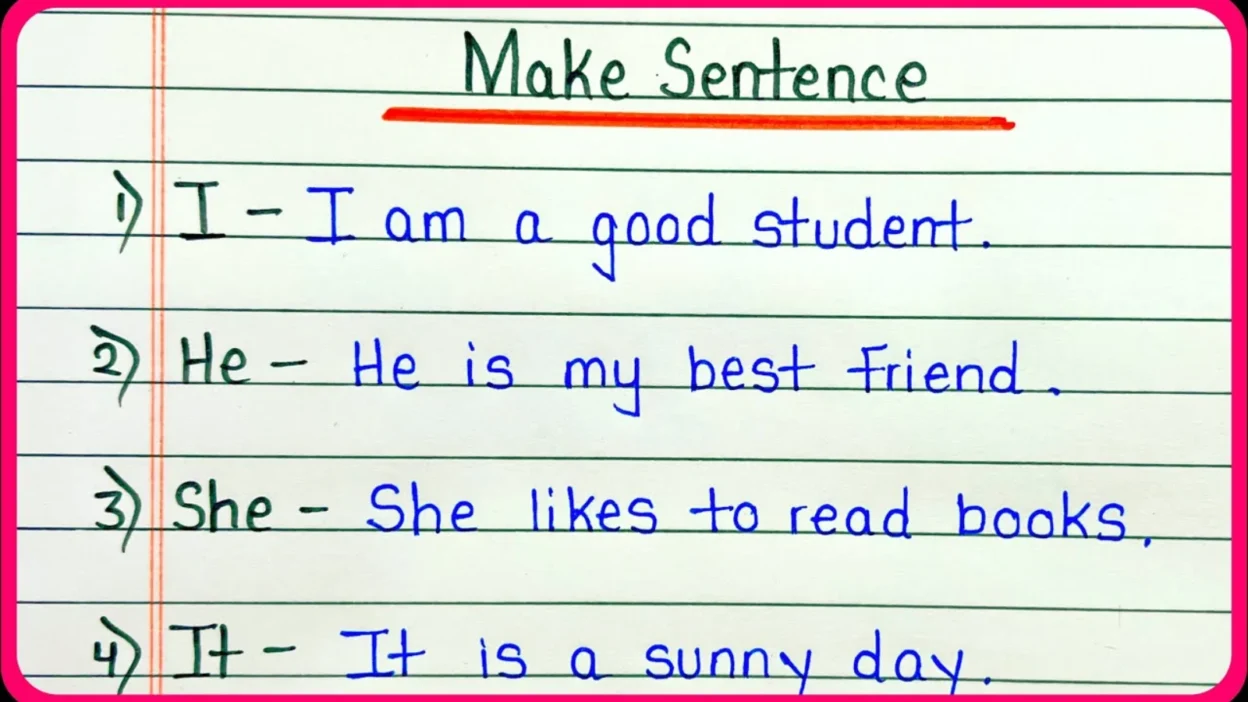
Examples
- I eat rice.
- She reads books.
- We are happy.
English Sentence Making in Different Tenses
Tenses are very important in sentence making.
Present Simple Tense
Use: Daily routine, habits, facts
Structure:
Subject + base verb (+ s/es)
Examples:
- I wake up early.
- He plays cricket.
- She works in an office.
Present Continuous Tense
Use: Action happening now
Structure:
Subject + is/am/are + verb + ing
Examples:
- I am studying English.
- She is cooking food.
- They are playing outside.
Past Simple Tense
Use: Finished actions
Structure:
Subject + past verb
Examples:
- I visited Lahore.
- She wrote a letter.
- We watched a movie.
Future Simple Tense
Use: Future plans or decisions
Structure:
Subject + will + base verb
Examples:
- I will help you.
- She will call tomorrow.
- They will learn English.
Making Negative Sentences
To make negative sentences, use not.
Examples
- I do not like coffee.
- She is not busy.
- They did not understand the lesson.
Making Questions in English
Yes/No Questions
Use helping verbs:
- Do / Does
- Is / Am / Are
- Did / Will
Examples:
- Do you speak English?
- Is she your friend?
- Did they finish work?
WH-Questions
Use question words:
- What, Where, When, Why, How, Who
Examples:
- What is your name?
- Where do you live?
- Why are you late?
Real-Life English Sentence Making Examples
At Home
I am cleaning my room.
Meanwhile, my mother is cooking dinner.
At School
The teacher explains the lesson.
Students write notes in their notebooks.
At Work
I am working on a project.
An email was sent to the client by him.
Why this works
- Added transition words like “meanwhile.”
- Changed sentence structure slightly.
- Avoided repeating the same sentence pattern.
Common Mistakes in English Sentence Making
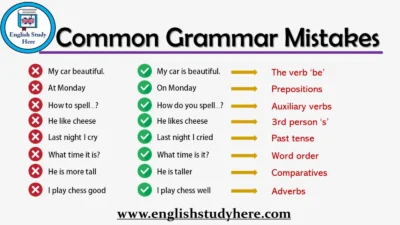
1. Wrong Word Order
❌ I to market go
✅ I go to the market.
2. Missing Verb
❌ She very kind
✅ She is very kind.
3. Wrong Tense
❌ Yesterday I go to school
✅ Yesterday I went to school.
4. Subject-Verb Agreement Error
❌ He play football
✅ He plays football.
Practice: Make Your Own Sentences
Try to make sentences using these words:
- eat
- read
- market
- teacher
- happy
Sample Answers
- I eat breakfast early.
- She reads English books.
- I went to the market.
- My brother is a teacher.
- We are very happy today.
Tips to Improve English Sentence Making
- Start with short sentences
- Speak sentences aloud
- Practice daily (5–10 sentences)
- Read simple English stories
- Learn from mistakes
Consistency is more important than speed.
Frequently Asked Questions (FAQ)
How can I improve English sentence making fast?
Practice daily, speak aloud, and write simple sentences using common words.
What is the easiest way to make English sentences?
Follow the Subject + Verb + Object structure and start with present tense.
Is grammar necessary for sentence making?
Yes, basic grammar helps you make correct and meaningful sentences.
How many sentences should I practice daily?
Start with 5–10 sentences daily. Quality is more important than quantity.
Can I learn English sentence making without a teacher?
Yes. With practice, examples, and reading, you can improve on your own.
Key Takeaways
- English sentence making is the foundation of speaking and writing
- Follow simple sentence structures
- Practice different tenses with real-life examples
- Learn from common mistakes
- Daily practice builds confidence
Final Words
English sentence making becomes easy when you practice step by step. Don’t try to be perfect. Start small, stay consistent, and enjoy learning.