
Sorry Generator
Introduction: Why English Speaking Feels Hard at First
If you are starting English speaking for beginners, you are not alone. Many learners understand English grammar and vocabulary but feel nervous when they speak. The good news? Speaking English is a skill, and skills improve with practice — not perfection.
In this guide, you will learn how to speak English step by step, using simple words, real-life examples, and beginner-friendly explanations. This article is written for non-native learners who want to speak English confidently in daily life, work, or study.
What Does “English Speaking for Beginners” Really Mean?
English speaking for beginners means learning how to:
- Speak simple English sentences
- Communicate daily needs clearly
- Build confidence, not fluency overnight
You do not need advanced grammar or a large vocabulary to start speaking.
Beginner Level Speaking Includes:
- Introducing yourself
- Asking and answering basic questions
- Talking about daily routines
- Expressing likes, needs, and opinions simply
Why Speaking English Is Important in 2026
In 2026, English is more important than ever because of:
- Online jobs and freelancing
- International communication
- AI tools and global platforms
- Education and travel
Speaking English opens opportunities, not just exams.
Step 1: Start with Simple English Sentences
Many beginners wait too long to speak because they want “perfect English.” That is a mistake.
Start Small 👇
Examples:
- I am learning English.
- My name is Ali.
- I live in Lahore.
- I like tea.
These sentences are simple but powerful.
Practice Tip
Speak out loud, not only in your mind.
Step 2: Learn Common Daily English Words
You don’t need thousands of words. Start with daily-use vocabulary.
Important Beginner Word Groups
| Category | Examples |
| Daily actions | eat, go, come, sleep |
| Feelings | happy, sad, tired |
| Time | today, tomorrow, now |
| People | friend, teacher, family |
Example Sentences
- I am tired today.
- I go to work in the morning.
- My family is very kind.
Step 3: Use Basic English Grammar (Only What You Need)
Grammar helps, but speaking comes first.
Focus on These Basics:
- Present Simple
- Past Simple (basic)
- Yes/No questions
Present Simple Examples:
- I work in an office.
- She studies English.
- We live here.
Past Simple Examples:
- I went home yesterday.
- I ate rice.
- I watched a movie.
👉 Don’t worry about mistakes. Even native speakers make them.
Step 4: Learn How to Ask Questions in English
Questions help you continue conversations.
Common Beginner Question Patterns
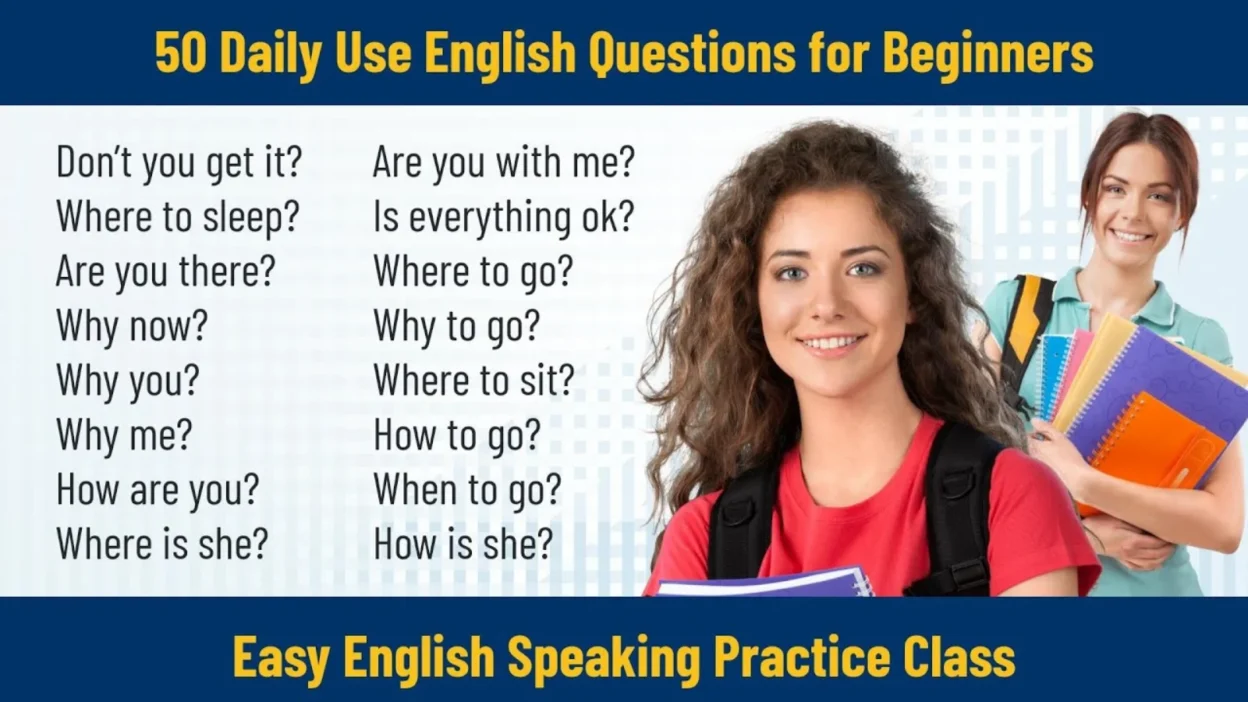
- What is your name?
- Where are you from?
- What do you do?
- Do you like English?
Real-Life Example
You: Where do you work?
Friend: I work in a shop.
Step 5: Speak English Daily (Even Alone)
You don’t need a partner to practice English speaking for beginners.
Easy Solo Speaking Practice Ideas
- Talk to yourself in English
- Describe what you see
- Speak in front of a mirror
- Record your voice
Example
Improved Versions
Option 1: Change the sentence structure
I am cooking food.
While cooking, I am cutting vegetables.
Right now, I feel hungry.
Option 2: Combine sentences
I am cooking food and cutting vegetables because I am hungry.
Option 3: Use different beginnings
I am cooking food.
At the same time, I am cutting vegetables.
Hunger is making me cook quickly.
Tip
Try to avoid starting many sentences with the same word. Use transition words such as:
While
At the same time
Because
Meanwhile
Also“I am cooking food. I am cutting vegetables. I am hungry.”
This builds thinking in English.
Step 6: Learn Common English Speaking Situations
1. Introducing Yourself
Hello, my name is Sara. I am learning English. I am a student.
2. At a Shop
How much is this?
I want this one.
3. Talking on the Phone
Hello, this is Ahmed speaking.
Can I call you later?
Common Mistakes Beginners Make (And How to Fix Them)
❌ Mistake 1: Fear of Mistakes
✔️ Solution: Mistakes = learning
❌ Mistake 2: Translating from Your Language
✔️ Solution: Learn English phrases, not word-by-word
❌ Mistake 3: Waiting for Perfect Grammar
✔️ Solution: Speak first, improve later
Useful English Speaking Phrases for Beginners
Daily Phrases
- Please help me
- I don’t understand
- Can you repeat?
- Thank you very much
Polite English
- Excuse me
- Sorry
- Nice to meet you
Step 7: Improve English Pronunciation Slowly
You do not need a native accent.
Focus on:
- Clear words
- Slow speaking
- Correct stress
Example
❌ “Wat r u duin?”
✔️ “What are you doing?”
Listening + repeating works best.
How Long Does It Take to Speak English?
For beginners:
- 1 month: Basic sentences
- 3 months: Simple conversations
- 6 months: Confidence speaking
👉 Consistency matters more than time.
English Speaking Practice Sentences (Featured Snippet Style)
Daily Practice Block
- I am learning English every day.
- I want to speak English fluently.
- I practice speaking at home.
- I am not afraid of mistakes.
Tips to Build Confidence in English Speaking
- Speak slowly
- Smile while speaking
- Use simple words
- Don’t compare yourself
Confidence grows with practice, not talent.
FAQ: English Speaking for Beginners (Schema-Ready)
❓ How can a beginner start speaking English?
Start with simple sentences, speak daily, and don’t fear mistakes. Practice speaking aloud every day.
❓ Can I learn English speaking without a teacher?
Yes. You can practice with videos, apps, mirrors, and self-speaking exercises.
❓ How many words do beginners need?
Around 500–1000 common words are enough for basic English speaking.
❓ Is grammar necessary for speaking English?
Basic grammar helps, but speaking practice is more important in the beginning.
❓ Why am I scared to speak English?
Fear comes from overthinking mistakes. The solution is daily small speaking practice.
Key Takeaways: English Speaking for Beginners
- Start speaking from day one
- Use simple sentences
- Practice daily, even alone
- Mistakes are normal
- Confidence grows with time
Final Words + Soft CTA
Learning English speaking for beginners is a journey, not a race. Speak a little every day, stay patient, and trust the process.