
Sorry Generator
Introduction: Why English Spoken Vocabulary Matters
English spoken vocabulary is the foundation of confident speaking. You may know grammar rules, but without the right spoken words, real conversations feel difficult. Native speakers use simple, everyday vocabulary—not textbook English.
In this guide, you will learn English spoken vocabulary in a clear, practical way. It is designed for beginner to intermediate learners who want to speak English naturally in daily life, work, and social situations.
This article focuses on:
- Real-life spoken words and phrases
- Easy explanations for non-native learners
- Common mistakes and how to avoid them
- Practice sentences you can use immediately
What Is English Spoken Vocabulary?
English spoken vocabulary refers to words and phrases commonly used in daily conversations. These words are often different from written or academic English.
Spoken vs Written Vocabulary (Quick Comparison)
| Spoken English | Written English |
| Short and simple | Formal and detailed |
| “Gonna”, “Wanna” | “Going to”, “Want to” |
| Everyday words | Advanced vocabulary |
| Used in conversation | Used in essays, emails |
Example:
- Spoken: “Can you help me?”
- Written: “I would appreciate your assistance.”
Core English Spoken Vocabulary for Daily Use
1. Daily Conversation Words
These are essential words you hear every day.
Examples:
- Hello / Hi
- Bye / See you
- Okay / Alright
- Sure / No problem
- Thanks / Thank you
Practice Sentences:
- “Hi, how are you today?”
- “Okay, I understand.”
- “Thanks for your help.”
2. Common Spoken Verbs
Verbs are the heart of spoken English.
Frequently used spoken verbs:
- Go
- Come
- Get
- Make
- Take
- Give
- Need
- Want
Examples in real life:
- “I need some water.”
- “Let’s go home.”
- “Can you help me?”
English Spoken Vocabulary for Real-Life Situations
1. At Home
Useful words and phrases:
- Turn on / Turn off
- Clean up
- Sit down
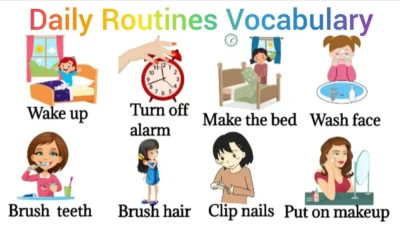
- Wake up
- Go to sleep
Example Sentences:
- “Please turn off the fan.”
- “I wake up at 7 a.m.”
2. At Work or School
Common spoken vocabulary:
- Meeting
- Deadline
- Homework
- Project
- Break
Examples:
- “We have a meeting today.”
- “When is the deadline?”
3. Shopping and Markets
Spoken vocabulary you need:
- Price
- Cheap / Expensive
- Discount
- Size
- Cash / Card
Examples:
- “How much is this?”
- “Do you have a discount?”
Everyday English Spoken Phrases (Very Important)
Learning phrases is better than learning single words.
Common Spoken English Phrases
- How are you?
- What’s going on?
- No worries
- I think so
- Let me see
- Sounds good
Example:
- “Sounds good, let’s do it.”
- “No worries, it’s okay.”
Beginner-Friendly English Spoken Vocabulary Examples
Simple Conversations
Conversation 1:
- A: “Hi, how are you?”
- B: “I’m fine. What about you?”
- A: “I’m good, thanks.”
Conversation 2:
- A: “What are you doing?”
- B: “I’m just relaxing.”
Common Mistakes in English Spoken Vocabulary
Mistake 1: Using Bookish Words in Speaking
❌ “I am very fatigued.”
✅ “I’m very tired.”
Mistake 2: Translating From Your Native Language
❌ “Open the light.”
✅ “Turn on the light.”
Mistake 3: Overthinking Grammar While Speaking
Fluency matters more than perfection in spoken English.
Spoken English Vocabulary for Feelings and Emotions
Common Feeling Words
- Happy
- Sad
- Angry
- Excited
- Tired
- Nervous
Examples:
- “I’m feeling tired today.”
- “She is very excited.”
Polite English Spoken Vocabulary
Politeness is key in English conversations.
Polite Spoken Words and Phrases
- Please
- Sorry
- Excuse me
- Thank you
- Could you…?
Examples:
- “Could you help me, please?”
- “Sorry for being late.”
Spoken English Vocabulary for Asking Questions
Common Question Words
- What
- Where
- When
- Why
- How
Examples:
- “What do you do?”
- “Where are you from?”
- “How does this work?”
English Spoken Vocabulary for Agreement and Disagreement
Agreement
- Yes
- Sure
- Exactly
- I agree
Disagreement
- No
- I don’t think so
- Not really
Examples:
- “Yes, I agree with you.”
- “I don’t think so.”
Practice Section: Use These in Real Life
Daily Practice Sentences
- “I’m on my way.”
- “Give me a minute.”
- “Let’s talk later.”
- “I’ll call you back.”
Speaking Tip
Practice these sentences aloud every day. Speaking improves by using, not memorizing.
How to Improve English Spoken Vocabulary Faster
Proven Tips (Teacher-Recommended)
- Listen to English daily (videos, podcasts)
- Repeat common phrases aloud
- Speak even if you make mistakes
- Learn phrases, not single words
- Practice with real people or AI tools
FAQ: English Spoken Vocabulary (People Also Ask)
What is English spoken vocabulary?
English spoken vocabulary includes everyday words and phrases used in daily conversations, not formal or written English.
How can beginners improve spoken English vocabulary?
By listening daily, practicing common phrases, speaking regularly, and avoiding translation from their native language.
Is spoken English different from written English?
Yes. Spoken English is simpler, shorter, and more natural than written English.
How many spoken English words should I learn?
Start with the most common 1,000–2,000 spoken words and phrases for daily communication.
Can I speak English without perfect grammar?
Yes. Clear vocabulary and confidence matter more than perfect grammar in spoken English.
Key Takeaways: English Spoken Vocabulary
- English spoken vocabulary is essential for real communication
- Focus on daily words and phrases
- Avoid bookish and translated expressions
- Practice speaking every day
- Confidence grows with use, not perfection
Final Words (Soft CTA)
English spoken vocabulary is a skill you build step by step. Start small, practice daily, and use English in real life.URL slug: /english-spoken-vocabulary-guide
Meta Description (155 characters):
Learn English spoken vocabulary step by step. Simple meanings, real-life examples, common mistakes, and practice for confident daily English speaking.
Introduction: Why English Spoken Vocabulary Matters
English spoken vocabulary is the foundation of confident speaking. You may know grammar rules, but without the right spoken words, real conversations feel difficult. Native speakers use simple, everyday vocabulary—not textbook English.
In this guide, you will learn English spoken vocabulary in a clear, practical way. It is designed for beginner to intermediate learners who want to speak English naturally in daily life, work, and social situations.
This article focuses on:
- Real-life spoken words and phrases
- Easy explanations for non-native learners
- Common mistakes and how to avoid them
- Practice sentences you can use immediately
What Is English Spoken Vocabulary?
English spoken vocabulary refers to words and phrases commonly used in daily conversations. These words are often different from written or academic English.
Spoken vs Written Vocabulary (Quick Comparison)
| Spoken English | Written English |
| Short and simple | Formal and detailed |
| “Gonna”, “Wanna” | “Going to”, “Want to” |
| Everyday words | Advanced vocabulary |
| Used in conversation | Used in essays, emails |
Example:
- Spoken: “Can you help me?”
- Written: “I would appreciate your assistance.”
Core English Spoken Vocabulary for Daily Use
1. Daily Conversation Words
These are essential words you hear every day.
Examples:
- Hello / Hi
- Bye / See you
- Okay / Alright
- Sure / No problem
- Thanks / Thank you
Practice Sentences:
- “Hi, how are you today?”
- “Okay, I understand.”
- “Thanks for your help.”
2. Common Spoken Verbs
Verbs are the heart of spoken English.
Frequently used spoken verbs:
- Go
- Come
- Get
- Make
- Take
- Give
- Need
- Want
Examples in real life:
- “I need some water.”
- “Let’s go home.”
- “Can you help me?”
English Spoken Vocabulary for Real-Life Situations
1. At Home
Useful words and phrases:
- Turn on / Turn off
- Clean up
- Sit down
- Wake up
- Go to sleep
Example Sentences:
- “Please turn off the fan.”
- “I wake up at 7 a.m.”
2. At Work or School
Common spoken vocabulary:
- Meeting
- Deadline
- Homework
- Project
- Break
Examples:
- “We have a meeting today.”
- “When is the deadline?”
3. Shopping and Markets
Spoken vocabulary you need:
- Price
- Cheap / Expensive
- Discount
- Size
- Cash / Card
Examples:
- “How much is this?”
- “Do you have a discount?”
Everyday English Spoken Phrases (Very Important)
Learning phrases is better than learning single words.
Common Spoken English Phrases
- How are you?
- What’s going on?
- No worries
- I think so
- Let me see
- Sounds good
Example:
- “Sounds good, let’s do it.”
- “No worries, it’s okay.”
Beginner-Friendly English Spoken Vocabulary Examples
Simple Conversations
Conversation 1:
- A: “Hi, how are you?”
- B: “I’m fine. What about you?”
- A: “I’m good, thanks.”
Conversation 2:
- A: “What are you doing?”
- B: “I’m just relaxing.”
Common Mistakes in English Spoken Vocabulary
Mistake 1: Using Bookish Words in Speaking
❌ “I am very fatigued.”
✅ “I’m very tired.”
Mistake 2: Translating From Your Native Language
❌ “Open the light.”
✅ “Turn on the light.”
Mistake 3: Overthinking Grammar While Speaking
Fluency matters more than perfection in spoken English.
Spoken English Vocabulary for Feelings and Emotions
Common Feeling Words
- Happy
- Sad
- Angry
- Excited
- Tired
- Nervous
Examples:
- “I’m feeling tired today.”
- “She is very excited.”
Polite English Spoken Vocabulary
Politeness is key in English conversations.
Polite Spoken Words and Phrases
- Please
- Sorry
- Excuse me
- Thank you
- Could you…?
Examples:
- “Could you help me, please?”
- “Sorry for being late.”
Spoken English Vocabulary for Asking Questions
Common Question Words
- What
- Where
- When
- Why
- How
Examples:
- “What do you do?”
- “Where are you from?”
- “How does this work?”
English Spoken Vocabulary for Agreement and Disagreement
Agreement
- Yes
- Sure
- Exactly
- I agree
Disagreement
- No
- I don’t think so
- Not really
Examples:
- “Yes, I agree with you.”
- “I don’t think so.”
Practice Section: Use These in Real Life
Daily Practice Sentences
- “I’m on my way.”
- “Give me a minute.”
- “Let’s talk later.”
- “I’ll call you back.”
Speaking Tip
Practice these sentences aloud every day. Speaking improves by using, not memorizing.
How to Improve English Spoken Vocabulary Faster
Proven Tips (Teacher-Recommended)
- Listen to English daily (videos, podcasts)
- Repeat common phrases aloud
- Speak even if you make mistakes
- Learn phrases, not single words
- Practice with real people or AI tools
FAQ: English Spoken Vocabulary (People Also Ask)
What is English spoken vocabulary?
English spoken vocabulary includes everyday words and phrases used in daily conversations, not formal or written English.
How can beginners improve spoken English vocabulary?
By listening daily, practicing common phrases, speaking regularly, and avoiding translation from their native language.
Is spoken English different from written English?
Yes. Spoken English is simpler, shorter, and more natural than written English.
How many spoken English words should I learn?
Start with the most common 1,000–2,000 spoken words and phrases for daily communication.
Can I speak English without perfect grammar?
Yes. Clear vocabulary and confidence matter more than perfect grammar in spoken English.
Key Takeaways: English Spoken Vocabulary
- English spoken vocabulary is essential for real communication
- Focus on daily words and phrases
- Avoid bookish and translated expressions
- Practice speaking every day
- Confidence grows with use, not perfection
Final Words (Soft CTA)
English spoken vocabulary is a skill you build step by step. Start small, practice daily, and use English in real life.