
Learning English grammar does not have to feel confusing or stressful. With the right grammar practice with answers, you can understand rules clearly, avoid common mistakes, and gain real confidence in reading, writing, and speaking.
This guide is written for beginner to intermediate learners. It uses simple English, real-life examples, short explanations, and plenty of practice sentences with answers. You can study alone, use it in class, or come back anytime to review.
Sorry Generator
Why Grammar Practice with Answers Is Important
Grammar rules make English clear and correct. But rules alone are not enough. You need practice, and you need answers to check your understanding.
Grammar practice with answers helps you:
- Learn faster by correcting mistakes immediately
- Understand why an answer is right or wrong
- Build confidence when writing or speaking
- Prepare for exams, interviews, or daily communication
Without answers, learners often repeat the same mistakes.
How to Use This Grammar Practice Guide
To get the best results:
- Read the explanation first
- Try the practice sentences on your own
- Check the answers carefully
- Read the explanation again if needed
💡 Tip: Say the sentences out loud. This improves both grammar and speaking.
Basic Sentence Structure (Beginner Level)
What Is a Sentence?
A sentence usually has:
- Subject (who or what)
- Verb (action or state)
Example:
- She works.
- They are happy.
Practice: Sentence Structure
Choose the correct sentence.
- ❌ She working every day.
- ✅ She works every day.
- ❌ Is raining today.
- ✅ It is raining today.
Answers:
- Sentence 2
- Sentence 4
Common mistake: Forgetting the subject or the correct verb form.
Present Simple Tense (Daily Actions)
When to Use the Present Simple
Use the present simple for:
- Daily habits
- Facts
- Schedules
Examples:
- I wake up at 7 a.m.
- She works in an office.
- Water boils at 100°C.
Form of Present Simple
| Subject | Verb (work) |
| I / You / We / They | work |
| He / She / It | works |
Practice: Present Simple
Fill in the blanks.
- She ___ (drink) coffee every morning.
- They ___ (play) football on Sundays.
- He ___ (go) to school by bus.
Answers:
- drinks
- play
- goes
Common mistake: Forgetting -s / -es with he, she, it.
Present Continuous Tense (Happening Now)
When to Use the Present Continuous
Use it for:
- Actions happening now
- Temporary actions
Examples:
- I am reading now.
- She is working today.
Structure
Subject + am / is / are + verb + -ing
Practice: Present Continuous
Choose the correct option.
- She (is / are) watching TV.
- They (is / are) studying English.
Answers:
- is
- are
Common mistake: Using present simple instead of continuous for “now”.
Past Simple Tense (Finished Actions)
When to Use the Past Simple
Use it for:
- Actions completed in the past
- A specific time in the past
Examples:
- I visited London last year.
- She finished her homework.
Regular vs Irregular Verbs
| Base Verb | Past Simple |
| work | worked |
| play | played |
| go | went |
| eat | ate |
Practice: Past Simple
Fill in the blanks.
- We ___ (watch) a movie yesterday.
- He ___ (go) home early.
Answers:
- watched
- went
Common mistake: Using present tense words like go instead of went.
Articles: A, An, The
When to Use A / An
- Use a before consonant sounds
- Use an before vowel sounds
Examples:
- a book
- an apple
When to Use The
Use the when:
- Both people know the thing
- There is only one
Example:
- The sun is hot.
- The teacher is here.
Practice: Articles
Choose the correct article.
- I saw ___ dog in the park.
- She ate ___ apple.
Answers:
- a
- an
Common mistake: Using the for everything.
Prepositions (In, On, At)
Common Uses
| Preposition | Use |
| in | months, years, rooms |
| on | days, surfaces |
| at | time, places |
Examples:
- in July
- on Monday
- at 5 p.m.
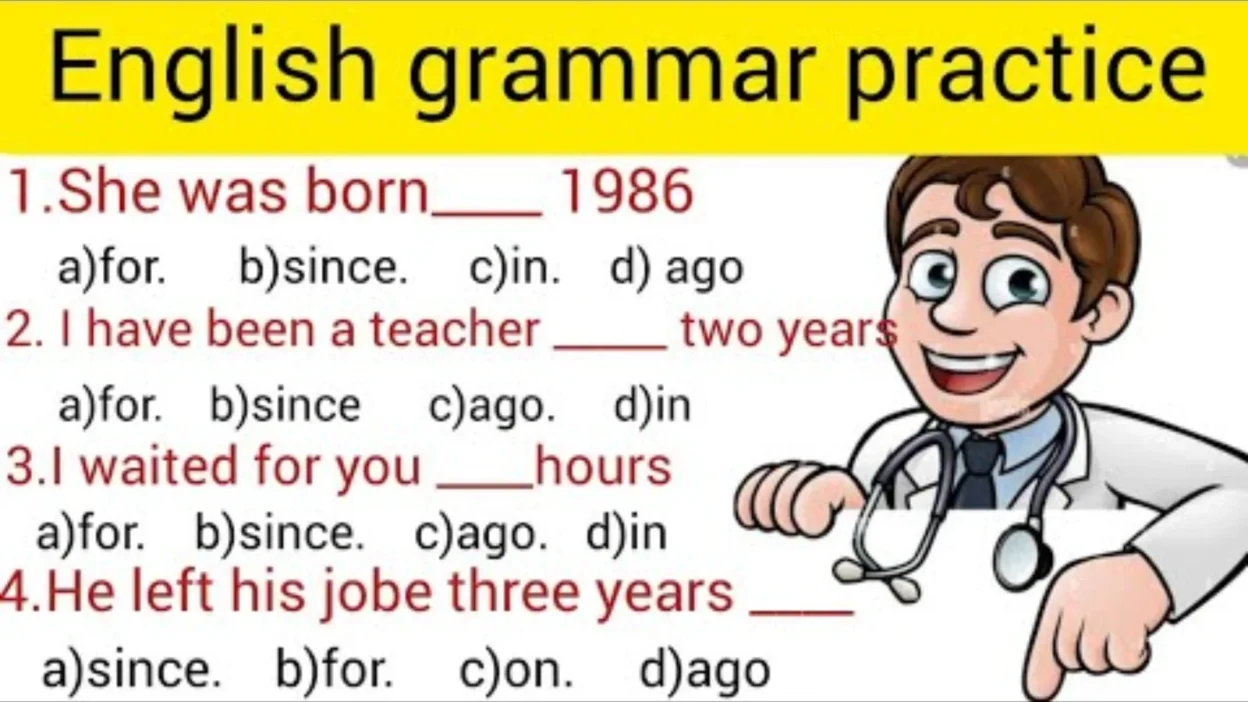
Practice: Prepositions
Fill in the blanks.
- I was born ___ 2000.
- We meet ___ Friday.
- She arrives ___ 8 a.m.
Answers:
- in
- on
- at
Common Grammar Mistakes (And How to Fix Them)
1. Subject-Verb Agreement
❌ She go to school.
✅ She goes to school.
2. Wrong Tense
❌ Yesterday, I go shopping.
✅ Yesterday, I went shopping.
3. Missing Articles
❌ I have car.
✅ I have a car.
Grammar Practice with Answers (Mixed Review)
Practice Set
- He ___ (be) very tired today.
- We ___ (study) English now.
- She ___ (buy) a new phone last week.
- I live ___ Canada.
- They have ___ dog.
Answers
- is
- are studying
- bought
- in
- a
Grammar Practice for Real-Life Situations
At Work
- I send emails every day.
- I am working on a project now.
At School
- She studies English.
- They had a test yesterday.
Daily Life
- We eat dinner at 7 p.m.
- He is cooking right now.
FAQ: Grammar Practice with Answers (People Also Ask)
What is grammar practice with answers?
Grammar practice with answers includes exercises where learners can check correct solutions and learn from mistakes.
Is grammar practice with answers good for beginners?
Yes. Beginners learn faster when they can see correct answers and clear explanations.
How often should I practice grammar?
Daily practice is best. Even 10–15 minutes a day helps a lot.
Can I learn grammar without a teacher?
Yes. With good grammar practice with answers, many learners study successfully on their own.
What grammar topics should I learn first?
Start with:
- Sentence structure
- Present simple
- Past simple
- Articles
- Prepositions
Key Takeaways
- Grammar practice with answers helps you learn faster
- Always check your mistakes and understand why
- Practice a little every day
- Focus on common grammar rules first
- Use real-life examples to remember better
Final Thoughts and Next Steps
English grammar becomes easy when you practice regularly and check your answers carefully. This guide gives you a strong foundation, but learning is a journey.