
Understanding parts of speech is the foundation of English grammar. Every sentence you speak, read, or write is built using parts of speech. If you know how they work, English becomes clearer, easier, and more natural.
This guide is written in simple, clear English for beginners and intermediate learners. You will learn what parts of speech are, how to use them correctly, common mistakes, and real-life examples you can relate to daily life.
Sorry Generator
What Are Parts of Speech? (Simple Definition)
Parts of speech are groups of words that show how a word works in a sentence.
Each word in English has a job.
That job is called its part of speech.
Example:
She runs fast.
- She → Pronoun
- runs → Verb
- fast → Adverb
Understanding these roles helps you:
- Speak more clearly
- Write correct sentences
- Avoid grammar mistakes
- Learn advanced English faster
Why Are Parts of Speech Important?
Parts of speech help you understand sentence structure.
They tell you:
- Who is doing the action
- What the action is
- What describes the action
- How ideas connect
Without parts of speech, English would feel confusing and unorganized.
The 8 Main Parts of Speech in English
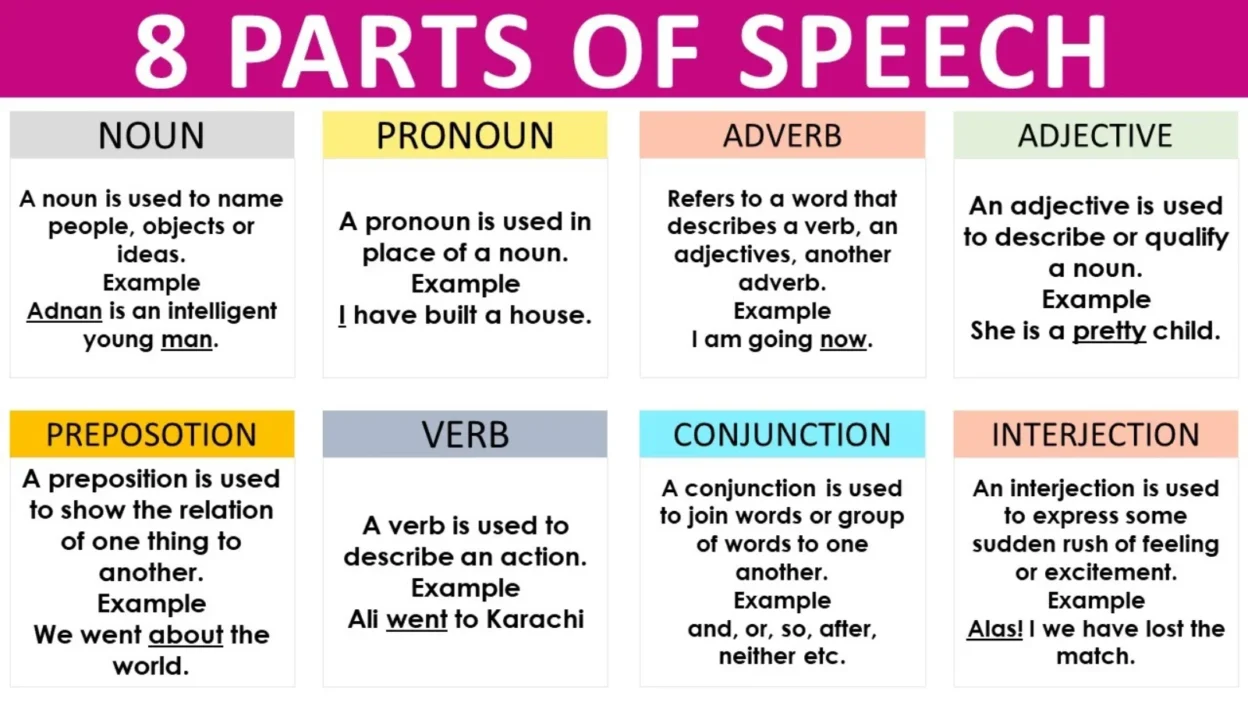
Most grammar books teach 8 main parts of speech. Some modern guides add more, but these 8 are the core.
| Part of Speech | Function |
| Noun | Names a person, place, or thing |
| Pronoun | Replaces a noun |
| Verb | Shows action or state |
| Adjective | Describes a noun |
| Adverb | Describes a verb, adjective, or adverb |
| Preposition | Shows relationship (time, place, direction) |
| Conjunction | Connects words or sentences |
| Interjection | Shows emotion or reaction |
Let’s explain each one step by step.
1. Noun – The Naming Word
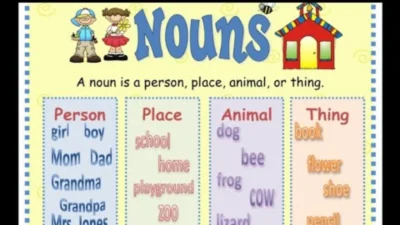
A noun names:
- A person
- A place
- A thing
- An idea
Examples of Nouns
- Person: teacher, Ali, doctor
- Place: school, Pakistan, park
- Thing: book, phone, chair
- Idea: love, freedom, happiness
Real-Life Example
My brother bought a new phone.
Common Mistakes
❌ Using a verb instead of a noun
✔️ Correct: His decision was good.
❌ Incorrect: His decide was good.
2. Pronoun – The Replacing Word
A pronoun replaces a noun to avoid repetition.
Common Pronouns
- I, you, he, she, it
- we, they
- my, his, her, their
Example
Sara is my friend. She lives near me.
Real-Life Use
Without pronouns:
Ali said Ali will help Ali’s brother.
With pronouns:
Ali said he will help his brother.
Common Mistakes
❌ Confusing he and she
✔️ Match pronouns with gender and number
3. Verb – The Action or State Word
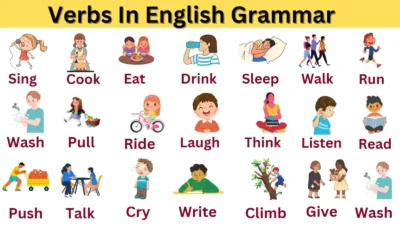
A verb shows:
- An action
- A state of being
Action Verbs
- run, eat, write, speak
State Verbs
- is, am, are, was, were
Example Sentences
She works in an office.
They are happy.
Common Mistakes
❌ Missing verb in a sentence
❌ She very smart.
✔️ She is very smart.
4. Adjective – The Describing Word
An adjective describes a noun.
It tells:
- How many
- What kind
- Which one
Examples
- a big house
- a red car
- three books
Sentence Example
I bought a new laptop.
Adjective Rule
Adjectives usually come before nouns.
✔️ a beautiful dress
❌ a dress beautiful (wrong for English learners)
5. Adverb – The Modifier
An adverb describes:
- A verb
- An adjective
- Another adverb
Many adverbs end in -ly, but not all.
Examples
- quickly
- very
- well
- today
Sentence Examples
He runs fast.
She speaks very politely.
Common Mistakes
❌ Using adjective instead of adverb
❌ She speaks good.
✔️ She speaks well.
6. Preposition – The Relationship Word
A preposition shows relationship between words, often about:
- Time
- Place
- Direction
Common Prepositions
- in, on, at
- under, over, between
- before, after
Examples
The book is on the table.
We will meet at 5 pm.
Easy Tip
Prepositions usually come before a noun.
7. Conjunction – The Connecting Word
A conjunction joins words, phrases, or sentences.
Common Conjunctions
- and
- but
- or
- because
- although
Example
I wanted to go out, but it was raining.
Real-Life Example
She studied hard because she wanted success.
8. Interjection – The Feeling Word
An interjection shows emotion or reaction.
Examples
- Oh!
- Wow!
- Oops!
- Hey!
Sentence Example
Wow! That movie was amazing.
Interjections are often followed by:
- Exclamation marks
- Commas
Parts of Speech Table (Quick Review)
| Word | Part of Speech | Example Sentence |
| book | Noun | I read a book |
| he | Pronoun | He is my friend |
| eat | Verb | I eat breakfast |
| happy | Adjective | She feels happy |
| quickly | Adverb | He runs quickly |
| on | Preposition | The cat is on the roof |
| and | Conjunction | Tea and coffee |
| wow | Interjection | Wow! Amazing |
Common Mistakes Learners Make
1. Mixing Adjective and Adverb
❌ He drives careful
✔️ He drives carefully
2. Missing Verbs
❌ She very kind
✔️ She is very kind
3. Overusing Nouns
❌ Ali said Ali likes Ali’s job
✔️ Ali said he likes his job
Practice Sentences (Try Yourself)
Identify the part of speech of the bold word.
- She bought a dress.
- They are waiting outside.
- He answered politely.
- The keys are under the table.
- Oh! I forgot my wallet.
(Answers at the end)
FAQ – Parts of Speech (People Also Ask)
What are parts of speech in simple words?
Parts of speech are categories that show how words work in a sentence.
How many parts of speech are there in English?
There are eight main parts of speech in English.
Why should beginners learn parts of speech?
They help learners build correct sentences and understand grammar easily.
Can one word have different parts of speech?
Yes. Example:
Book (noun) – I read a book
Book (verb) – Please book a seat
Are parts of speech important for speaking?
Yes. They improve speaking accuracy and confidence.
Featured Snippet: Parts of Speech Definition
Parts of speech are groups of words that show how each word functions in a sentence, such as nouns, verbs, adjectives, and adverbs.
Quick Summary: Key Takeaways
- Parts of speech are the foundation of English grammar
- There are 8 main parts of speech
- Every sentence uses multiple parts of speech
- Learning them improves speaking, writing, and understanding
- Practice is the key to mastery
Practice More & Improve Your Grammar
Now that you understand parts of speech, try:
- Reading short paragraphs and identifying word roles
- Writing your own sentences
- Exploring more grammar topics step by step
Final Thoughts
Learning parts of speech is the first step toward strong English grammar. Start with simple sentences. Practice every day. Read, write, and identify word function.