Sorry Generator
Introduction to the Past Tense
The past tense is one of the most important parts of English grammar. We use it to talk about actions, events, or situations that already happened.
If you want to tell a story, explain what you did yesterday, or talk about your childhood, you need the past tense.
This guide is written in simple, clear English for beginner to intermediate learners. You will learn:
- What the past tense is
- Types of past tense
- Easy rules and examples
- Common mistakes
- Practice sentences
- FAQs and quick tips
By the end, you’ll feel confident using the past tense in real life.
What Is the Past Tense? (Simple Definition)
The past tense is used to describe:
- Something that happened in the past
- An action that is finished
- A situation that is no longer true
Simple examples:
- I walked to school yesterday.
- She ate breakfast at 7 a.m.
- They played cricket last Sunday.
Featured snippet tip:
Past tense = verbs used to talk about completed actions in the past.
Types of Past Tense in English
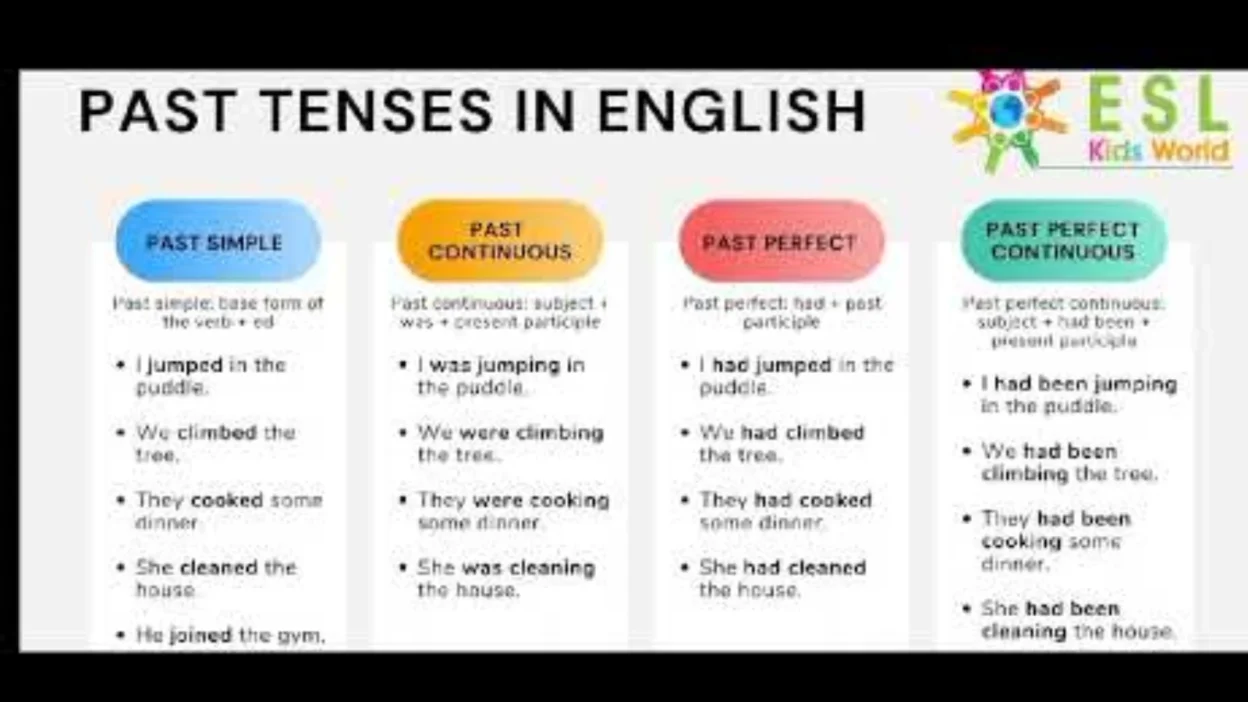
English has four main types of past tense. Each one has a different use.
Overview Table
| Past Tense Type | Main Use | Example |
| Simple Past | Finished action | I watched TV |
| Past Continuous | Action in progress | I was watching TV |
| Past Perfect | Action before another past action | I had watched TV |
| Past Perfect Continuous | Duration before past action | I had been watching TV |
Let’s explain each one step by step.
1. Simple Past Tense (Most Important)
The simple past tense is the most commonly used past tense.
When to use simple past tense
Use it when:
- The action is completed
- The time is finished
- You know when it happened
Examples:
- I visited my friend yesterday.
- He bought a new phone last week.
- We finished our homework.
Simple Past Tense Structure
Affirmative (positive):
Subject + past form of verb
- I worked
- She went
Negative:
Subject + did not + base verb
- I did not work
- She did not go
Question:
Did + subject + base verb?
- Did you work?
- Did she go?
Regular vs Irregular Verbs
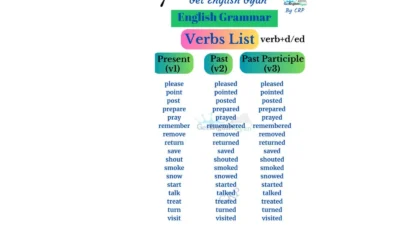
Regular verbs
Add -ed to the base form.
| Base Verb | Past Form |
| play | played |
| clean | cleaned |
| watch | watched |
Irregular verbs
They change form completely.
| Base Verb | Past Form |
| go | went |
| eat | ate |
| see | saw |
| take | took |
⚠️ There is no rule for irregular verbs. You must practice and memorize them.
2. Past Continuous Tense
The past continuous tense shows an action that was happening at a specific time in the past.
When to use past continuous
- An action in progress in the past
- Two actions happening at the same time
- One action interrupted by another
Examples:
- I was studying at 9 p.m.
- She was cooking when I arrived.
- They were playing while it was raining.
Past Continuous Structure
Subject + was/were + verb + ing
- I was reading
- They were talking
3. Past Perfect Tense
The past perfect tense is used for an action that happened before another action in the past.
When to use past perfect
- To show which action happened first
- Often used with before or after
Examples:
- I had finished my work before dinner.
- She had left when I called.
- They had never seen snow before.
Past Perfect Structure
Subject + had + past participle
- I had eaten
- He had gone
4. Past Perfect Continuous Tense
The past perfect continuous tense focuses on the duration of an action before another past action.
When to use it
- To show how long something was happening
- Emphasizes time and duration
Examples:
- I had been waiting for two hours.
- She had been working all day.
- They had been living there for years.
Past Perfect Continuous Structure
Subject + had been + verb + ing
Common Time Words Used with Past Tense
These words often signal past tense:
- yesterday
- last night / last week / last year
- ago
- in 2020
- then
- when I was a child
Example:
- I met him two days ago.
Real-Life Examples of Past Tense
Daily life
- I woke up late today.
- She missed the bus.
School
- We learned English grammar yesterday.
- The teacher explained the lesson.
Work
- He sent the email in the morning.
- They completed the project.
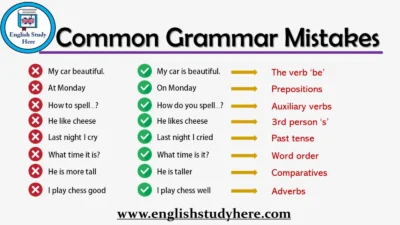
Common Mistakes with Past Tense (And Fixes)
❌ Mistake 1: Using the present form instead of the past
When talking about yesterday or a finished time, use the past simple form of the verb.
❌ I go to school yesterday.
✅ I went to school yesterday.
❌ Mistake 2: Using a past form after “did”
After did, always use the base form of the verb.
❌ Did you went there?
✅ Did you go there?
❌ Mistake 3: Forgetting irregular verbs
Some verbs have special past forms that must be memorized.
❌ She eated food.
✅ She ate food.
Practice Sentences (Try Yourself)
Fill in the blanks:
- I ___ (watch) a movie last night.
- She ___ (go) to the market yesterday.
- We ___ (study) English grammar.
- He ___ (not / finish) his work.
- ___ you ___ (see) him last week?
Answers:
- watched
- went
- studied
- did not finish
- Did, see
Past Tense vs Present Perfect (Quick Note)
Many learners confuse these.
- Past tense: Finished time
- I ate lunch at 1 p.m.
- Present perfect: Time not finished or unknown
- I have eaten lunch.
This topic deserves a full lesson, but this difference is important.
FAQ: Past Tense (People Also Ask)
What is the past tense in simple words?
The past tense is used to talk about actions that already happened.
How many past tenses are there in English?
There are four: simple past, past continuous, past perfect, and past perfect continuous.
When should I use “did”?
Use “did” for negative sentences and questions in the simple past tense.
What is the most common past tense?
The simple past tense is the most common and most important.
How can I learn past tense easily?
Practice daily, learn irregular verbs, and use past tense in real sentences.
Key Takeaways: Past Tense Made Easy
- Past tense talks about completed actions
- Simple past is the most important
- Learn regular and irregular verbs
- Use correct structure for negatives and questions
- Practice with real-life examples
Final Thoughts & Soft CTA
Learning the past tense is a big step toward fluent English. Don’t rush. Practice a little every day, speak aloud, and write short sentences.