Learning spoken English grammar rules is different from learning grammar for exams or writing. In real conversations, English is simpler, more flexible, and more practical.
If you want to:
- Speak English confidently
- Sound natural (not like a textbook)
- Avoid common speaking mistakes
This guide is for you.
In this article, you’ll learn spoken English grammar rules in clear, easy English. Each rule comes with real-life examples, practice sentences, and common mistakes so you can use English naturally in daily life.
Sorry Generator
What Is Spoken English Grammar?
Spoken English grammar is the way people actually speak English in daily conversations.
It is:
- Less formal than written grammar
- More flexible
- Focused on clarity, not perfection
Written vs Spoken English (Quick Comparison)
| Written English | Spoken English |
| Very structured | More relaxed |
| Long sentences | Short sentences |
| Full forms | Contractions |
| Formal words | Simple words |
Written: I am going to attend the meeting.
Spoken: I’m going to the meeting.
Why Spoken English Grammar Rules Matter
Many learners know grammar rules but still feel nervous while speaking.
That’s because:
- They focus too much on perfection
- They try to translate from their native language
- They use book-style English
Learning spoken English grammar rules helps you:
- Speak faster
- Sound natural
- Reduce fear and hesitation
Rule 1: Use Simple Sentence Structures
In spoken English, simple sentences are best.
Basic Spoken Sentence Pattern
Subject + Verb + Object
Examples:
- I like coffee.
- She works here.
- We need help.
Avoid Over-Complicated Sentences
❌ I would like to inform you that I am interested.
✅ I’m interested.
Tip: If a sentence feels too long, break it into two.
Rule 2: Use Contractions in Speech
Native speakers almost always use contractions when speaking.
Common Spoken Contractions
| Full Form | Spoken Form |
| I am | I’m |
| You are | You’re |
| He is | He’s |
| Do not | Don’t |
| Cannot | Can’t |
| I will | I’ll |
Examples in Real Life
- I’m tired.
- She’s busy right now.
- We don’t know.
Common Mistake:
❌ I am not understanding.
✅ I don’t understand.
Rule 3: Spoken English Uses the Present Simple a Lot
The present simple tense is the most used tense in spoken English.
Use It For:
- Daily routines
- Facts
- Habits
Examples:
- I work in an office.
- She lives nearby.
- We meet every Friday.
Spoken Tip: Don’t overthink tenses. Simple is fine.
Rule 4: Drop Unnecessary Words
In spoken English, people often skip extra words.
Examples
Written:
- Do you want to have some coffee?
Spoken:
- Want some coffee?
Written:
- Are you going to come with us?
Spoken:
- Coming with us?
This is very common in casual conversation.
Rule 5: Questions in Spoken English Are Flexible
In exams, questions follow strict rules.
In spoken English, they don’t always.
Formal Question
- Are you coming tomorrow?
Natural Spoken Questions
- You coming tomorrow?
- Coming tomorrow?
Both are correct in conversation.
Rule 6: Use “Going to” and “Gonna”
In spoken English, going to is often pronounced as gonna.
Examples:
- I’m going to call him. → I’m gonna call him.
- She’s going to travel. → She’s gonna travel.
⚠️ Important:
Use “gonna” only in speaking, not in formal writing.
Rule 7: Spoken English Uses Short Answers
Long answers are not natural in daily speech.
Example
Question: Are you busy?
❌ Yes, I am busy at the moment.
✅ Yeah, a bit.
Common Short Answers
- Yeah / Yep
- Nope
- A little
- Not really
- Kind of
Rule 8: Use Fillers Naturally (But Not Too Much)
Fillers help you think while speaking.
Common Spoken Fillers
- Um
- Uh
- You know
- I mean
- Like
Example:
- I was, um, thinking about it.
Warning: Too many fillers make speech unclear. Use them lightly.
Rule 9: Use Active Voice More Than Passive
Spoken English prefers active voice.
Passive (Formal)
- The work was completed by him.
Active (Spoken)
- He finished the work.
Active sentences are:
- Shorter
- Clearer
- Easier to say
Rule 10: Use Common Spoken Verbs
Spoken English uses simple verbs, not complex ones.
Formal vs Spoken Verbs
| Formal Verb | Spoken Verb |
| Purchase | Buy |
| Assist | Help |
| Inform | Tell |
| Request | Ask |
| Continue | Keep |
Example:
❌ I will inform you.
✅ I’ll tell you.
Common Spoken English Grammar Mistakes
1. Translating Word by Word
❌ I am having 25 years.
✅ I am 25 years old.
2. Wrong Tense Usage
❌ I am knowing him.
✅ I know him.
3. Missing Articles
❌ I bought car.
✅ I bought a car.
4. Overusing Formal Grammar
❌ Kindly revert back.
✅ Let me know.
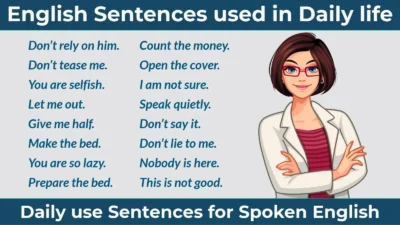
Practice Sentences (Try Saying Them Aloud)
- I’m gonna call you later.
- You wanna join us?
- I don’t feel like going.
- She’s working today.
- We’ll talk tomorrow.
Tip: Speaking out loud improves fluency faster than silent reading.
Spoken English Grammar Rules for Daily Situations
At Work
- I’ll send it today.
- Can you check this?
- Let’s talk later.
With Friends
- What’s up?
- Sounds good.
- I’m in.
At a Shop
- How much is this?
- I’ll take it.
- Any discount?
FAQ: Spoken English Grammar Rules (People Also Ask)
What are spoken English grammar rules?
Spoken English grammar rules focus on how people actually speak, using simple sentences, contractions, and natural expressions.
Is spoken English grammar different from written grammar?
Yes. Spoken grammar is more relaxed, flexible, and informal than written grammar.
Can I speak English without perfect grammar?
Yes. Clear and confident communication is more important than perfect grammar.
How can I improve spoken English grammar fast?
Practice speaking daily, use simple sentences, listen to native speakers, and avoid translating from your native language.
Are grammar mistakes acceptable in spoken English?
Small mistakes are normal and acceptable as long as your message is clear.
Key Takeaways: Spoken English Grammar Rules
- Spoken English is simple and natural
- Use short sentences and contractions
- Focus on clarity, not perfection
- Practice speaking every day
- Learn grammar through real conversations
Final Tip 🌟
The best way to master spoken English grammar rules is practice, not memorization. Speak daily, listen carefully, and don’t fear mistakes—they are part of learning.
.