
Subject verb agreement is one of the most important grammar rules in English. If your subject and verb do not match, your sentence sounds wrong—even if the meaning is clear.
This guide explains subject verb agreement in simple, clear English, especially for non-native learners. You will learn the rules step by step, see real-life examples, avoid common mistakes, and practice with easy sentences.
Whether you are a student, blogger, teacher, or ESL learner, this article will help you write and speak English with confidence.
Sorry Generator
What Is Subject Verb Agreement?
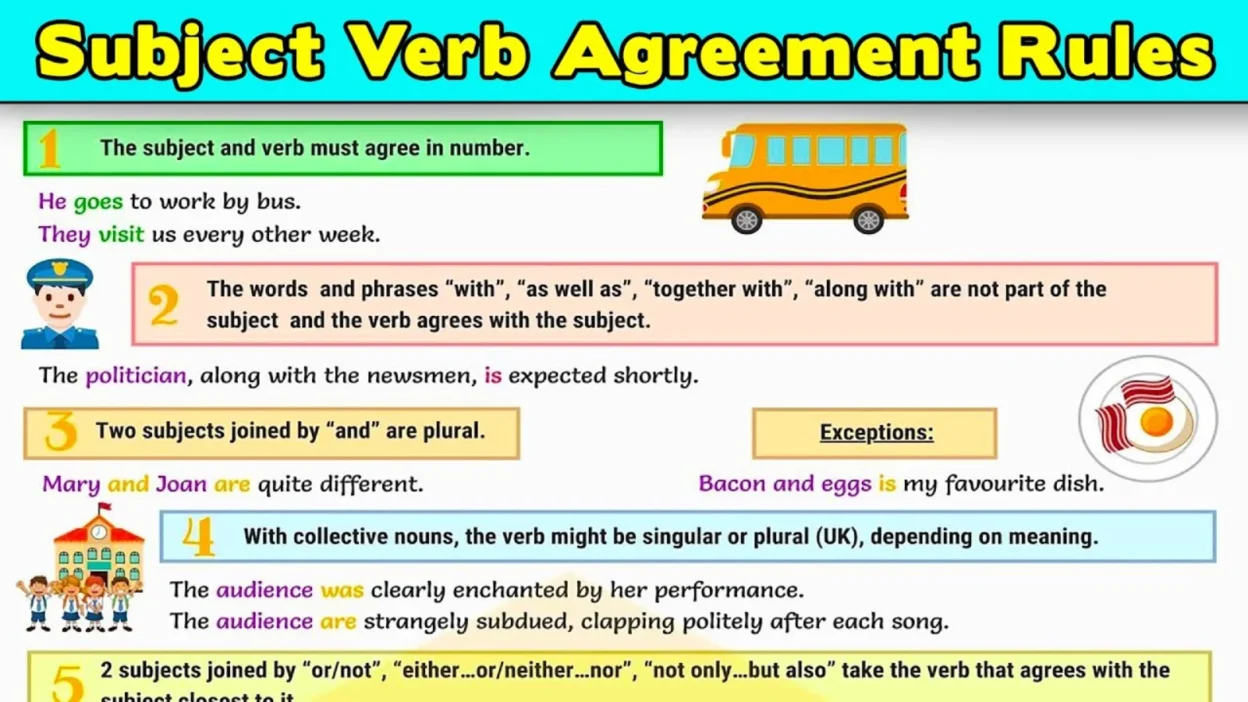
Subject verb agreement means that the subject of a sentence and the verb must agree in number (singular or plural).
Basic Rule
- Singular subject → singular verb
- Plural subject → plural verb
Simple Examples
- She works every day. ✅
- They work every day. ✅
Wrong examples:
- She work every day. ❌
- They works every day. ❌
Why Subject Verb Agreement Is Important
Correct subject verb agreement helps you:
- Sound natural and fluent
- Avoid confusion
- Write professional emails and articles
- Improve exam scores (IELTS, TOEFL, school exams)
- Build trust with readers (important for SEO and content writing)
Even small agreement mistakes can reduce clarity and credibility.
Identify the Subject First (Very Important)
Before choosing the verb, always find the subject.
Ask:
Who or what is doing the action?
Example
- The boy runs fast.
Subject = boy (singular) - The boys run fast.
Subject = boys (plural)
Singular and Plural Nouns: Quick Review
| Type | Examples |
| Singular | boy, girl, cat, city |
| Plural | boys, girls, cats, cities |
Most plural nouns end in -s or -es, but not all.
Subject Verb Agreement in the Present Simple Tense
This is where learners make the most mistakes.
Rule
- With he / she / it → verb + s / es
- With I / you / we / they → base verb
Examples
- She likes coffee.
- He plays cricket.
- It rains a lot here.
But:
- I like coffee.
- They play cricket.
Common Verbs That Change Form
| Base Verb | He / She / It |
| work | works |
| go | goes |
| watch | watches |
| study | studies |
| do | does |
| have | has |
Subject Verb Agreement With Compound Subjects
1. Subjects Joined by AND
When two subjects are joined by and, the verb is usually plural.
- Ali and Ahmed are friends.
- Tea and coffee are popular drinks.
Exception (One Idea)
If two nouns refer to one thing, use a singular verb.
- Bread and butter is my breakfast.
- Rice and curry is his favorite meal.
Subjects Joined by OR / NOR
When subjects are joined by or or nor, the verb agrees with the nearest subject.
Examples
- Either the teacher or the students are coming.
- Either the students or the teacher is coming.
Subject Verb Agreement With Collective Nouns
Collective nouns refer to a group.
Common Collective Nouns
- team
- family
- class
- group
- audience
- staff
Rule
- Use singular when the group acts as one
- Use plural when individuals act separately
Examples
- The team is winning the match.
- The team are wearing different jerseys.
Subject Verb Agreement With Uncountable Nouns
Uncountable nouns are always singular.
Common Uncountable Nouns
- water
- sugar
- rice
- information
- advice
- furniture
- news
Examples
- The news is shocking.
- This information is helpful.
Wrong:
- The information are useful. ❌
Subject Verb Agreement With Indefinite Pronouns
Some pronouns are always singular, some plural, and some both.
Always Singular
- everyone
- someone
- anyone
- nobody
- each
- either
- neither
Examples:
- Everyone is ready.
- Each student has a book.
Always Plural
- few
- many
- several
Examples:
- Many people are waiting.
Singular or Plural (Depends on Context)
- all
- some
- most
- none
Examples:
- All the water is gone.
- All the students are here.
Subject Verb Agreement With There Is / There Are
Rule
The verb agrees with the real subject, not with “there”.
Examples
- There is a book on the table.
- There are many books on the table.
Subject Verb Agreement With Titles and Names
Titles of books, movies, and subjects are singular.
- Mathematics is difficult.
- “Harry Potter” is famous.
Subject Verb Agreement With Numbers and Amounts
When a number refers to one amount, use singular.
- Ten years is a long time.
- Five dollars is enough.
Common Subject Verb Agreement Mistake
1. Ignoring the Real Subject
Sometimes writers focus on the wrong word in a sentence. The main subject, not the extra words, decides the verb form.
❌ The list of items are long.
✅ The list of items is long.
Here, “list” is the real subject, and it is singular.
2. Confusion With Prepositional Phrases
Prepositional phrases (like of apples, in the room, with friends) can make sentences confusing. The verb must agree with the main subject, not the noun inside the phrase.
❌ The box of apples are heavy.
✅ The box of apples is heavy.
The subject is “box”, which is singular.
3. Problems With Words Like “Everyone”
Indefinite pronouns such as everyone, someone, and anyone are always singular.
❌ Everyone are happy.
✅ Everyone is happy.
Even though “everyone” refers to many people, it still uses a singular verb.
Practice Sentences (Try Yourself)
Choose the correct verb.
- The dog (run / runs) fast.
- My friends (like / likes) pizza.
- Everyone (has / have) a phone.
- There (is / are) many reasons.
- Bread and butter (is / are) healthy.
Answers:
- runs
- like
- has
- are
- is
Featured Snippet Example: Quick Rule Box
Subject Verb Agreement Rule:
If the subject is singular, use a singular verb.
If the subject is plural, use a plural verb.
Subject Verb Agreement for ESL Learners (Tips)
- Always find the subject first
- Ignore words between subject and verb
- Learn common singular pronouns
- Practice daily with short sentences
- Read aloud to hear mistakes
Frequently Asked Questions (FAQ)
What is subject verb agreement in simple words?
Subject verb agreement means the subject and verb must match in number. Singular subjects take singular verbs, and plural subjects take plural verbs.
Why do we add “s” to verbs with he, she, and it?
In the present simple tense, English adds -s or -es to verbs with third-person singular subjects.
Is “everyone” singular or plural?
“Everyone” is always singular and takes a singular verb.
What are common subject verb agreement errors?
Common errors include ignoring the real subject, confusion with collective nouns, and misuse of indefinite pronouns.
How can I improve subject verb agreement?
Practice daily, read simple English texts, write short sentences, and check the subject before choosing the verb.
Key Takeaways
- Subject verb agreement is essential for clear English
- Match singular subjects with singular verbs
- Be careful with collective nouns and pronouns
- Practice helps you avoid common mistakes
- Correct grammar builds confidence and trust
Final Thoughts
Mastering subject verb agreement takes practice, not perfection. Start with simple sentences, understand the rules, and apply them in daily writing and speaking.